

 Equity management

 Equity management
- Fund management

 Fund management
 - Fund managementFund management
- Fund managementFund management
A liquidity event is any transaction that lets shareholders convert their equity into cash or publicly tradable shares. It is the moment paper ownership becomes realized value. Private company equity is illiquid by default: you can hold vested shares or stock options for years without being able to sell them, because there is no public market and transfers are usually restricted. A liquidity event creates a route to cash out, whether that is a full exit or a partial sale.
The people affected span the whole cap table: founders who built the company, employees holding options and RSUs, early investors looking for a return, and common shareholders further down the payout order. Liquidity events cover both public exits like IPOs and acquisitions, and private-company programs like tender offers and secondary sales.
A liquidity event is the process by which illiquid ownership, usually shares in a private company, gets converted into cash or freely tradable stock. Strip away the deal-specific complexity, and every liquidity event runs on the same three ingredients: a buyer, a price, and a settlement process. The buyer might be a public market (via an IPO), an acquirer, a private equity firm, or an approved secondary investor. The price is set either by negotiated deal terms or a recent valuation. Settlement is when shares actually change hands and money moves.
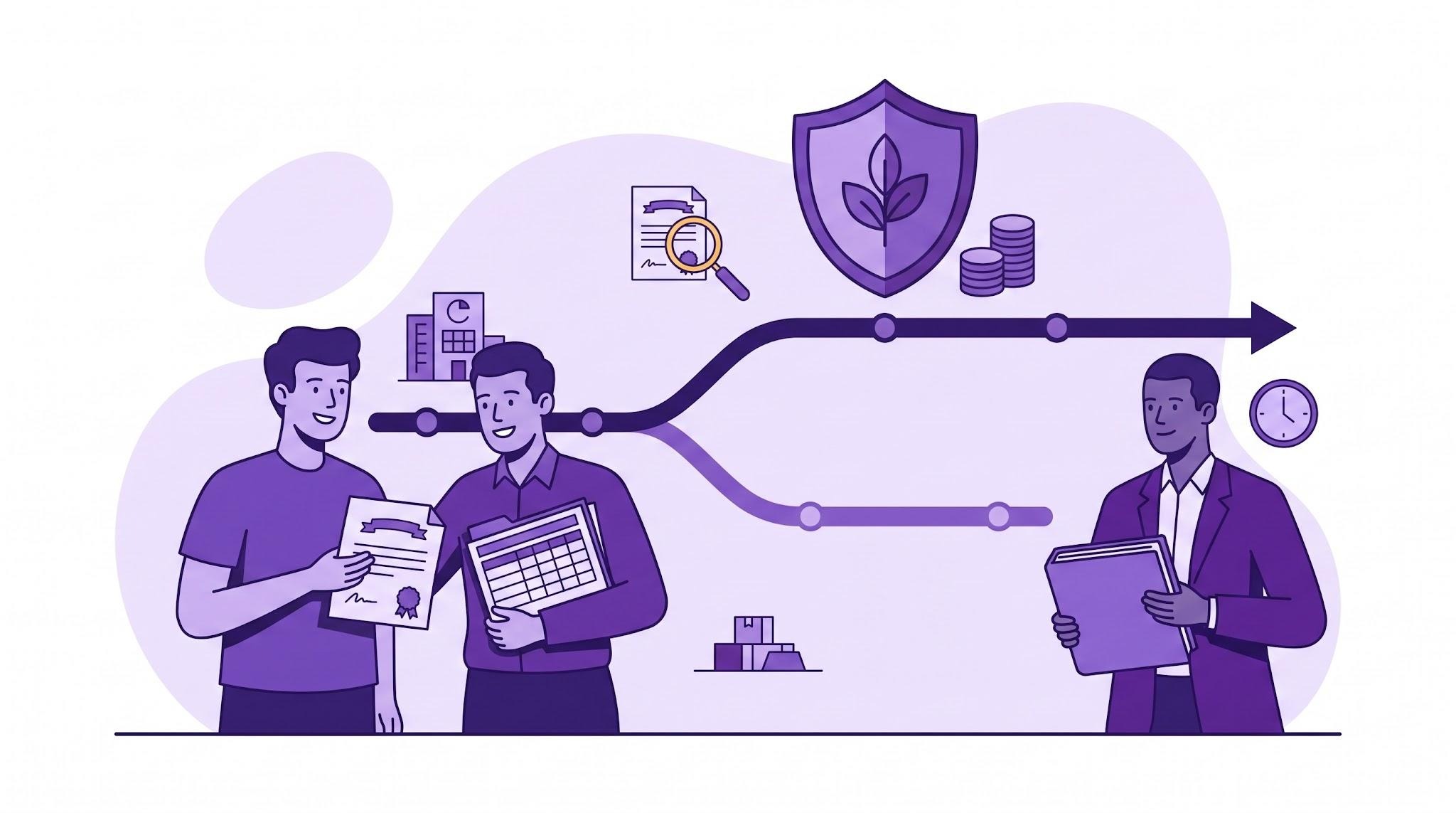
Before anything else, determine which mechanism applies:
Valuation drives everything that follows. Depending on the event type, this might come from:
Before a sale can proceed, the relevant agreements need to be checked:
Most liquidity events require formal sign-off:
The buyer (or underwriters, in an IPO) will review financials, contracts, cap table accuracy, and legal standing. Sellers typically need to produce documentation and resolve any outstanding issues; unresolved disputes, unclear ownership stakes, or missing consents can stall the process here.
Once documentation is signed and approvals are in place, the actual exchange happens:
The event isn't quite done once money moves:
Not all liquidity events look alike. Some are full exits, some are partial, and some are distressed outcomes nobody plans for.
An IPO takes a private company public, listing its shares on an exchange to be freely traded. It's not instant cash for everyone: lock-up periods, set by the underwriting agreement, commonly run 90 to 180 days before insiders can sell, and trading windows still apply afterward. A direct listing lets existing shareholders sell straight into the market without issuing new shares, while a special purpose acquisition company (SPAC) merger, going public by merging with an already-listed shell company, is often faster but carries its own trade-offs, like sponsor dilution and volatile post-merger performance.
In a merger, two companies combine into one; in an acquisition, one buys another outright. Shareholders get paid in cash, acquirer stock, or a mix, and structure matters: a stock sale transfers the whole company including liabilities, while an asset sale transfers only specific assets. Vested options are usually cashed out or assumed; unvested equity may accelerate, convert, or lapse depending on the deal.
Existing shareholders sell shares directly to a buyer; the company raises no new capital, and proceeds go to the seller. It's a common way for early investors and long-tenured employees to get partial liquidity, but it's rarely unrestricted; most sales need company approval and are subject to rights of first refusal.
A structured, company-run program letting eligible shareholders sell a portion of their shares at a set price within a defined window. Unlike ad hoc secondaries, the company controls eligibility, caps, buyers, and how transfers flow into the cap table.
A recapitalization restructures the debt-equity mix on the balance sheet. In a dividend recap, the company takes on new debt to return capital to shareholders without a full exit, liquidity without giving up ownership or operations, though the added debt raises risk, so it's used carefully.
In a management buyout, existing leadership buys the company, often with PE financing; in a straight PE buyout, the firm acquires a controlling stake directly. Either way, sellers get liquidity and control shifts to new owners, usually bringing new governance and performance targets.
Not every liquidity event is a win. In distress, a company sells or winds down assets, with creditors paid first, equity holders sit last and often get nothing. It's why most venture-backed companies lean on structured programs like tender offers and secondaries instead.
They are different terms, though they sound similar.
A liquidity event doesn't treat every shareholder the same way. Payout order, amount, and even whether someone gets paid at all depends on what type of holder they are and what's written into the company's equity agreements.
Liquidity events matter because equity is only valuable once it can be converted into something usable, cash, or freely tradable stock. For founders, it's the payoff for years of building, and often the point where they gain financial independence from the company's fortunes. For investors, it's how returns get realized rather than staying as paper gains on a spreadsheet. For employees, it's usually the first real chance to benefit from equity compensation that's otherwise illiquid and hard to value day to day.
Taxes on a liquidity event depend on who holds what and how the deal is structured.
1. Founders: Gains on founder shares are typically taxed as capital gains, with the rate depending on how long the shares were held. In the US, qualifying founder stock may be eligible for qualified small business stock (QSBS) treatment, which can exclude a significant portion of gains from federal tax if specific holding-period and company criteria are met.
2/ Investors: Preferred shareholders are also taxed on capital gains when they sell or convert their shares, with long-term rates applying if held past the required period. In stock-for-stock deals, tax can sometimes be deferred since no cash changes hands immediately, whereas cash deals trigger tax right at closing.
3. Employees: Tax treatment depends on the type of equity. Non-qualified stock options (NSOs) are taxed as ordinary income at exercise on the spread between the exercise price and fair market value, with capital gains tax applying to any further gain at sale. Incentive stock options (ISOs) can qualify for capital gains treatment if specific holding-period rules are met, though they may trigger alternative minimum tax (AMT) at exercise. RSUs are taxed as ordinary income when they vest, regardless of whether the shares are sold.
Because rules vary by jurisdiction, equity type, and individual circumstances, you need personalized tax advice.
A liquidity event moves fast once it starts, and most delays come from things that should have been sorted out well in advance. Preparing early makes the process smoother and protects value for everyone on the cap table.
Buyers and boards need an accurate, up-to-date record of who owns what, including options, SAFEs, and convertible notes. Errors or missing consents here are one of the most common causes of deal delays.
A recent, defensible valuation (like a 409A) speeds up pricing conversations and reduces disputes over fairness, especially for equity compensation and tax purposes.
Check transfer restrictions, rights of first refusal, and approval requirements in shareholder agreements ahead of time, so they don't surprise anyone mid-negotiation.
Buyers and underwriters will scrutinize financial statements closely. Clean, well-documented financials shorten due diligence and reduce the risk of price renegotiation.
Since most events need board and often shareholder approval, early alignment on deal terms and expectations avoids last-minute pushback.
Model how the event affects vested and unvested equity, liquidation preferences, and payout order across different holder classes, so there are no surprises when the waterfall runs.
Legal counsel, bankers, and tax advisors help structure the deal, negotiate terms, and avoid costly mistakes, their involvement early on is far cheaper than fixing problems after signing.
Liquidity events matter because they turn ownership into outcomes. Done well, they let founders realize the value of what they built, give investors the returns that justify the risk they took, and reward employees for the equity they earned along the way. They also bring discipline, the preparation a liquidity event demands, from clean cap tables to solid financials, tends to make a company stronger regardless of how the deal turns out. For everyone involved, a liquidity event isn't just a payday; it's the moment illiquid belief in a company finally becomes something real.
Preparing for a tender offer, secondary sale, M&A, or IPO starts with having accurate, audit-ready equity data. Qapita's Cap table management keeps your ownership records clean and ready, so when a liquidity event comes up, you're not scrambling to fix data under deal pressure.
Book a demo to walk through your cap table and records against the readiness checklist.
Liquidity events tend to happen when several forces line up: company maturity, investor exit timelines, strong acquisition interest, IPO readiness, growing employee liquidity demand, and secondary-market appetite. With IPO windows delayed, more companies run structured secondary programs and tender offers to give employees and early backers liquidity without waiting for a public listing.
Creditors are paid first, followed by preferred shareholders through their liquidation preference. Common shareholders, including founders and employees, are paid last from whatever remains.
It's when equity that couldn't easily be sold, like private company shares, gets converted into cash or freely tradable stock through an IPO, acquisition, secondary sale, or similar transaction.
A common example is a company getting acquired: say a private software company is bought by a larger tech firm for $500 million in cash. Shareholders, founders, investors, and employees with vested options, get paid out according to the deal terms and their position in the payout order. Other examples include a company going public through an IPO, or early investors selling their shares to a new investor in a secondary sale.
In a private company, shares aren't traded on any public market, so there's usually no easy way to convert equity into cash. A liquidity event is the specific occurrence that changes this, an IPO, acquisition, secondary sale, tender offer, or similar transaction, that lets shareholders finally sell their shares or receive a payout for them.