

 Equity management

 Equity management
- Fund management

 Fund management
 - Fund managementFund management
- Fund managementFund management


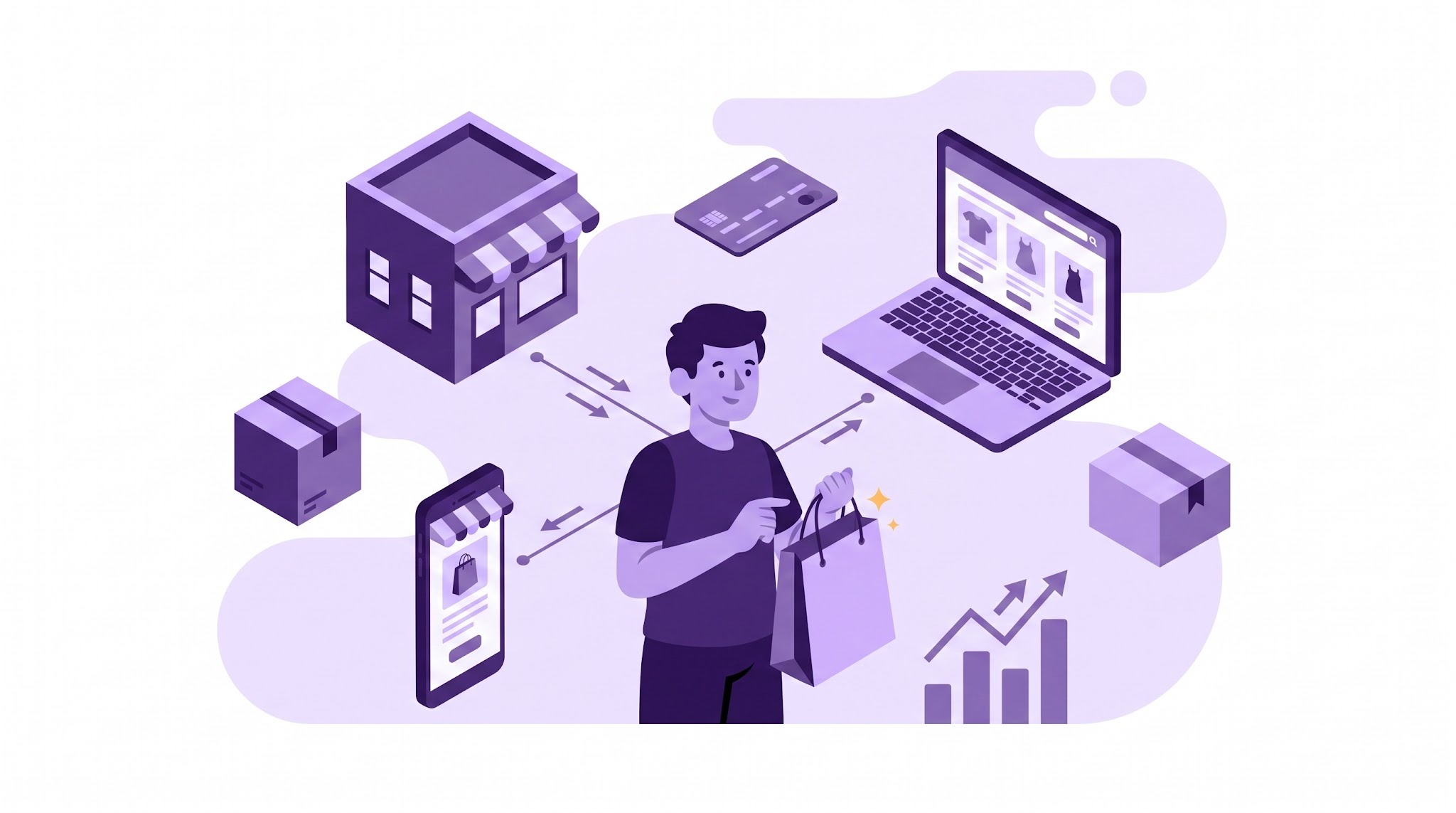

B2C stands for business-to-consumer. It describes a company that sells products or services straight to individual buyers instead of other companies. The defining trait of a B2C business is not the product itself, it's the customer.
This covers everyday purchases such as ordering groceries online, signing up for a streaming app, or buying a phone case in a store. A B2C company competes on price, branding, convenience, and customer experience to win and keep individual buyers.
There are six recognized types of B2C business models, and most modern companies combine two or three of them.
A direct seller is a retailer or manufacturer that sells straight to consumers through physical stores, its own website, or both. Direct sellers own their inventory and control pricing and the customer experience. Walmart and Target run large e-commerce operations alongside physical stores, and Nike sells through its own channels in addition to wholesale.
In dropshipping, a business lists products online but doesn't buy or store any of them upfront. Once a customer pays, the business orders that item from a supplier, who ships it straight to the customer. The seller never touches the product or holds inventory.
Because there's no stock sitting in a warehouse, this model cuts the cost of inventory, storage, and packaging. That's why dropshipping is a popular way for new or small sellers to launch a store and test products without much upfront money.
An online marketplace or intermediary is a platform that connects buyers and sellers but typically does not own the inventory. These platforms earn fees or commissions on each transaction. eBay handles listings and payments between individuals and merchants, and Etsy does the same for independent sellers and artisans.
An advertising-based B2C model offers free or low-cost content and turns consumer attention into revenue. Google Search and YouTube are free to use and funded mostly by advertising. Major news and media sites follow the same approach: free access, paid ad space.
A community-based model is built around user interaction and social features, then monetized through ads, subscriptions, or virtual goods. Reddit runs user-generated forums monetized through advertising and premium memberships. Twitch, a live-streaming platform, earns from ads, paid subscriptions, and virtual goods.
A fee-based or subscription model charges a direct fee or a recurring subscription for access to content, services, or tools. Netflix charges consumers a monthly fee for streaming, and Spotify premium does the same for music. These models look clean on paper, but they live or die on churn, a detail most guides skip.
Modern B2C companies often blend channels and revenue models further:
A B2C company sells to individual consumers. A B2B company (short for business-to-business, or "B to B") sells to other businesses and professionals, often through a longer, procurement-heavy sales cycle. D2C is a subset of B2C where a brand sells to consumers without going through retailers or wholesalers.
Here are some examples of how real companies fit into the B2C types above.
A B2C business model sells directly to individual consumers, and it's one of the easiest models to define, yet one of the hardest to run well. The six core types rarely operate in isolation. Most large consumer companies blend two or more, and the boundary between B2C, D2C, and B2B often comes down to distribution and the decision driver rather than the product itself.
Knowing which type you run matters less than knowing your numbers. CAC, LTV, churn, and payback period decide whether the model works, and churn quietly controls the rest, since a model can look identical on paper but perform very differently depending on retention.
There's no universally superior choice between B2C, B2B, or D2C; each fits different products, buyers, and growth strategies. The right model is the one whose economics you understand well enough to defend, and whose numbers hold up under scrutiny before you scale.
At Qapita, we understand the challenges founders face once a business raises outside capital and the cap table no longer fits in a spreadsheet. Our equity management platform keeps cap table complexities in check, tracks compliance, and manages employee equity in one place.
The platform also gives employees clear, accessible details on their equity stakes, adding transparency to your company's ownership story as the team grows alongside the business.
Qapita supports founders from the first funding round through IPO with reliable cap table management and equity solutions. Book a demo to learn more.
The B to B business definition covers a company that sells products or services to other companies, often through a long, procurement-heavy sales cycle. B2C sells to individual consumers instead, usually through a single-step purchase driven by price, brand, or convenience.
B2C digital marketing is advertising and content aimed at individual consumers rather than corporate buyers. It typically leans on emotional messaging, social proof, and short conversion paths across channels such as paid social, search ads, and email.
Both. Amazon's retail and marketplace businesses are B2C, but AWS, its cloud computing division, sells almost entirely to other businesses, giving Amazon major B2C and B2B segments side by side.
Netflix is B2C. Its core business sells subscriptions straight to individual consumers, a textbook fee-based model. It licenses some content and runs partnerships, but those stay secondary to a consumer subscription base that defines the company.
D2C is a subset of B2C. Both sell to individual consumers, but a D2C brand sells only through its own channels, skipping retailers and wholesalers entirely. A B2C business can sell through retail, marketplaces, or its own site, so every D2C brand is B2C, but not every B2C brand is D2C.