ESOP Management for Private Companies

Flexible for startups. Built for scaled ESOP operations. Compliant from day one.​  ​  ​

As private companies move towards institutional ownership and public-market scrutiny, ESOPs demand more than basic tracking. Qapita provides a robust ESOP management platform designed to handle complex equity structures and regulatory requirements.​
blue bg
G2 Grid® for Equity Management Software | Summer 2025

Recognized as a Global Leader on G2

We are ranked the best in Customer Satisfaction, Enterprise and Mid-Market.

Why Indian startups choose Qapita as their ESOP management partner​

Designed for early stage to growth stage companies​

From seed-stage to Series C, Qapita streamlines equity management across every growth stage. Create your pool, define custom vesting schedules, configure plan rules, and issue ESOPs, SARs, or phantom shares, all from one platform. Built for India's private markets and global compliance standards.​

Turn equity into a talent magnet​

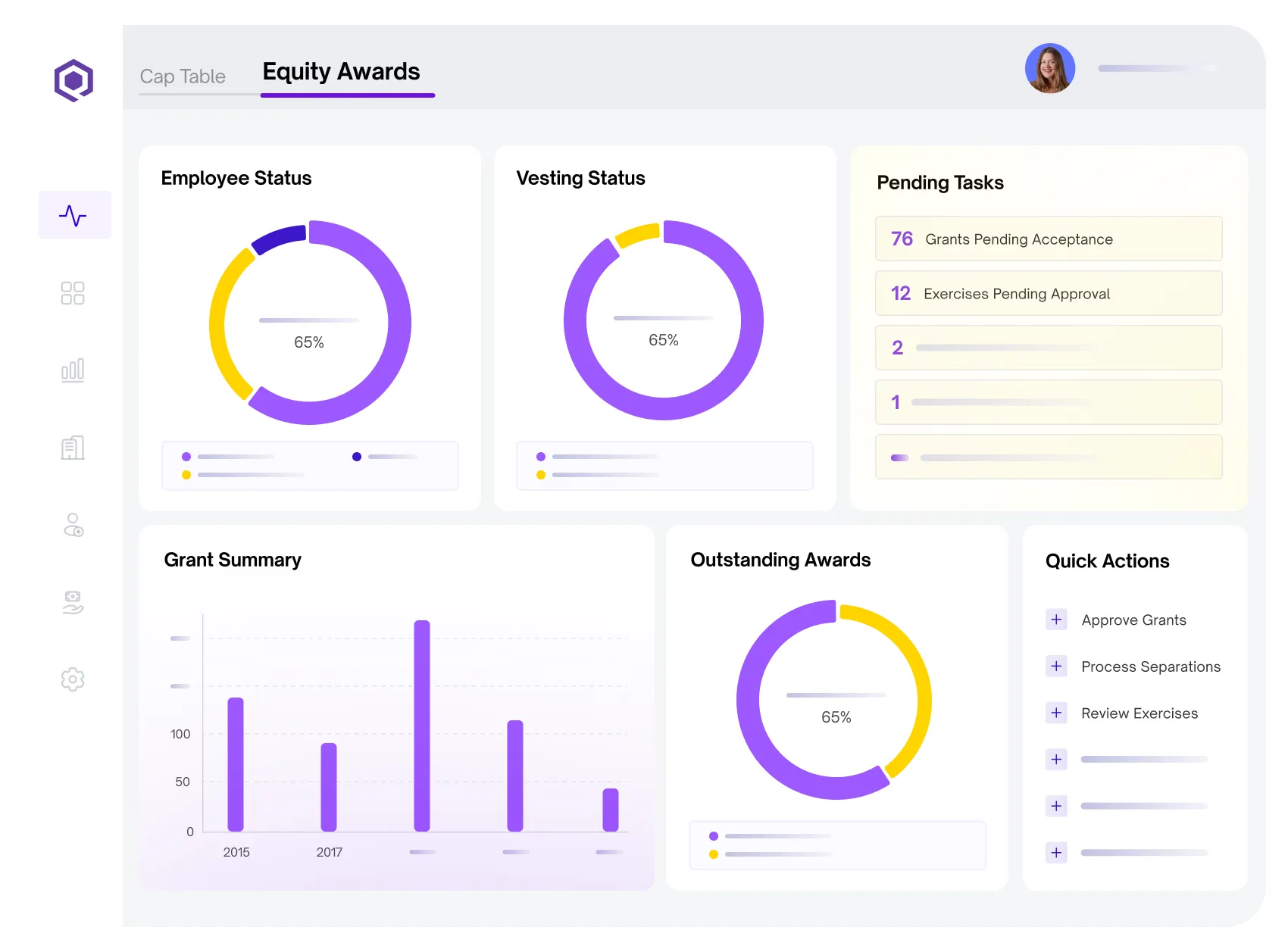
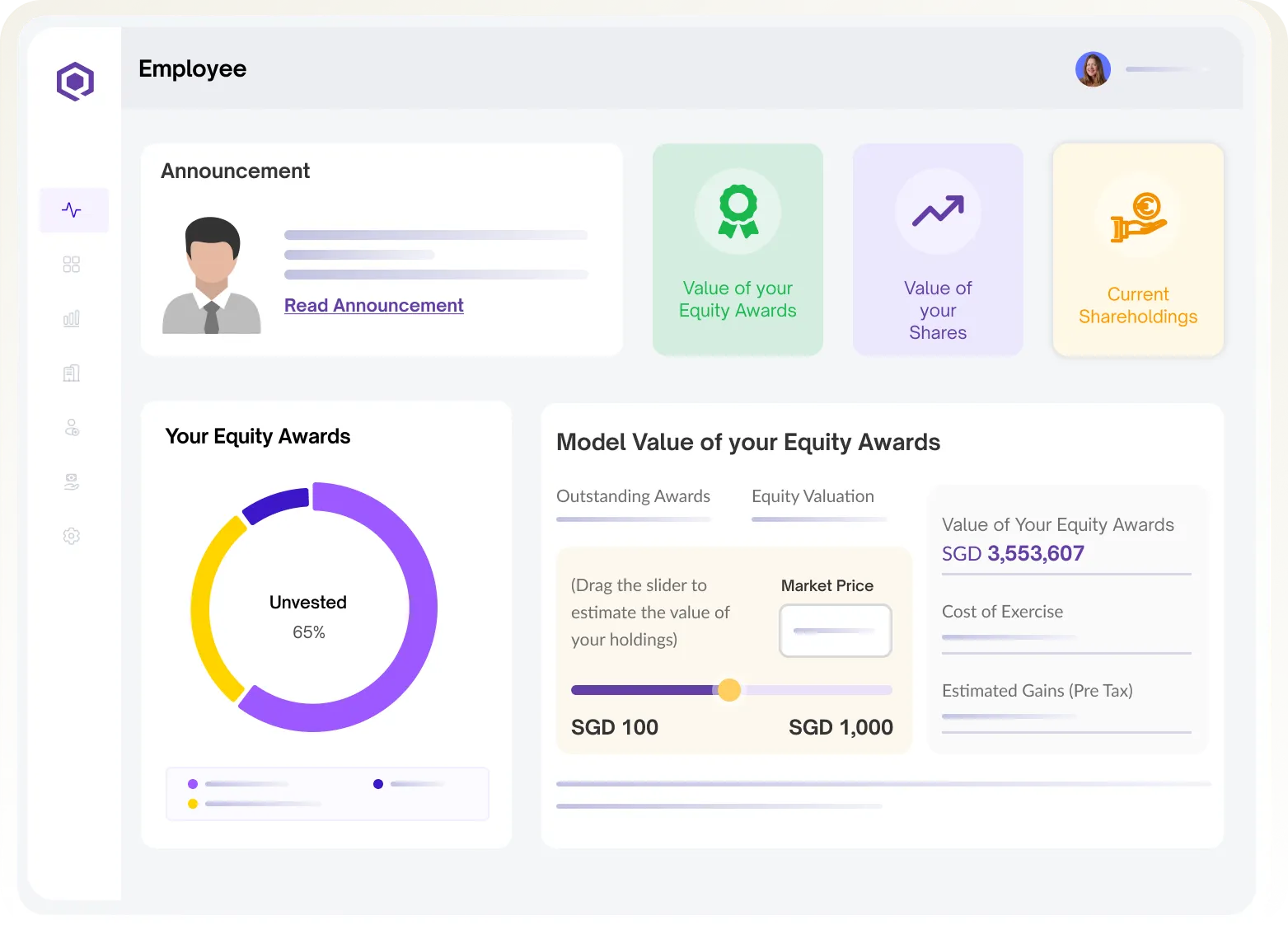
Empower your team with clarity and ownership. Qapita's intuitive dashboards provide real-time visibility into grant allocations, while personalized portals help employees understand their equity value and stake in company success. Leverage local tax guides, educational resources, and milestone-based communication to transform equity from a policy into a proven retention tool.

Seamless integration with cap table and fundraise models​

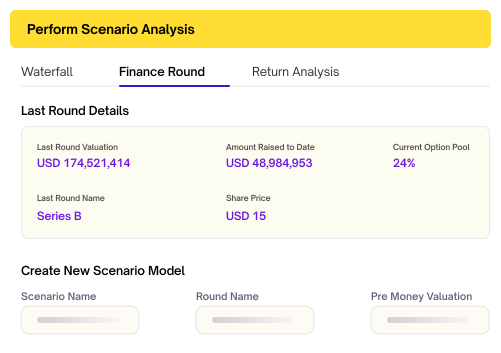
Integrate equity planning with your cap table to model pool expansions, simulate dilution scenarios, and negotiate rounds confidently. Gain instant visibility into how option allocations impact founder equity and investor stakes, no spreadsheets required.​

How Qapita manages ESOP for private companies​

Plan Design & Setup

Create equity plans that grow with you​

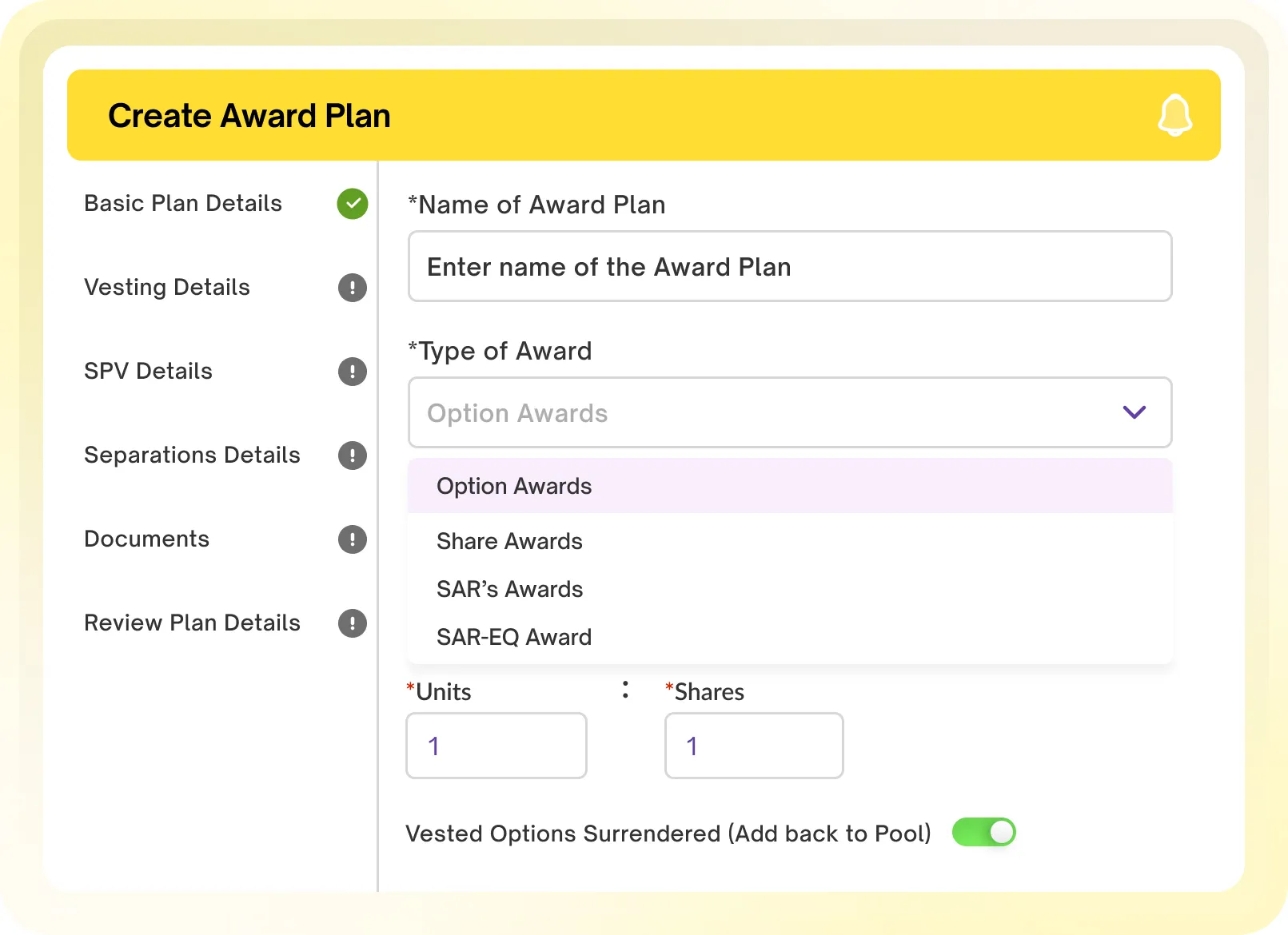
Design your first ESOP pool or restructure existing grants as you raise rounds. Qapita supports equity instruments like ESOPs, SARs, and phantom shares with flexible vesting, cliffs, and exercise logic along with assistance in drafting policies and plan rules aligned with Indian startup norms.​
Grant Issuance & Approval Workflows

Issue ESOPs with structure, not spreadsheets​

Use templated agreements, maker-checker flows, and digital signatures to issue grants to employees, advisors, or consultants. Whether it’s a 10-member team or a 5,000-person workforce, Qapita simplifies and tracks every grant in one secure, auditable system.​
Vesting, Exercise & Payout Workflows

ESOP infrastructure designed for your needs​

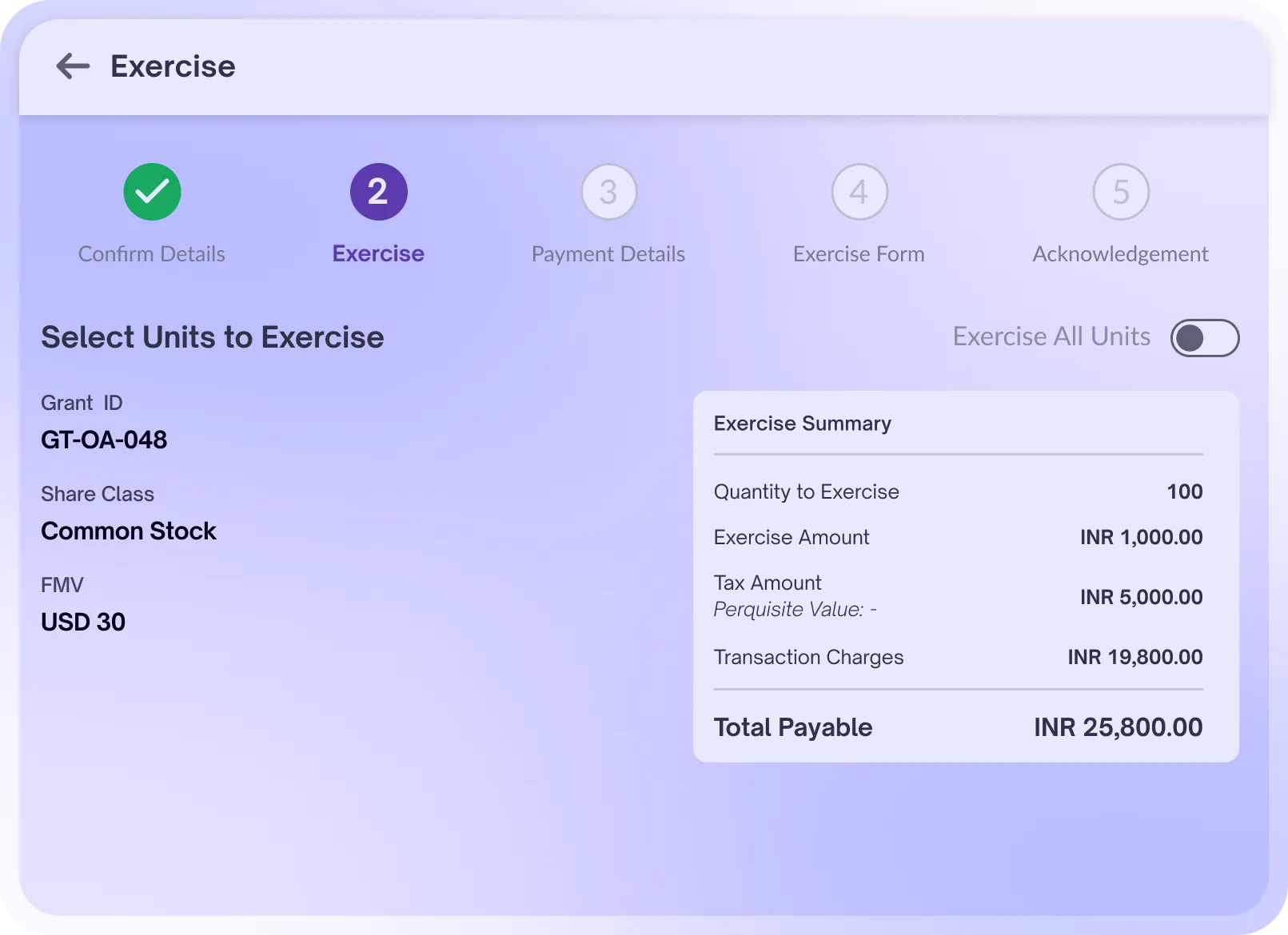
Tailor every aspect of your equity program to your business model and growth stage. Choose from performance-based or milestone-triggered vesting schedules, run equity and cash-settled plans simultaneously, and connect seamlessly with your existing HRIS and payroll systems for automated tax calculations and employee mobility tracking. Customize the employee experience to reflect your equity philosophy at every stage. Rather than forcing your team into a generic mold, Qapita's adaptive dashboards surface the metrics and milestones that matter most to your organization.
Employee Dashboards & Education

Turn equity into an engagement driver and retention magnet​

Qapita gives employees personal dashboards to track grants, vesting, and potential future value. We are also the only equity software to provide equity pay slip in the market. Combine that with education sessions, helpdesk, and local tax explainers to help your team understand the true worth of their equity specifically in a private company, even before a liquidity event.​
Diligence-Ready Reporting & Audit Trails

Stay ready for every round or exit​

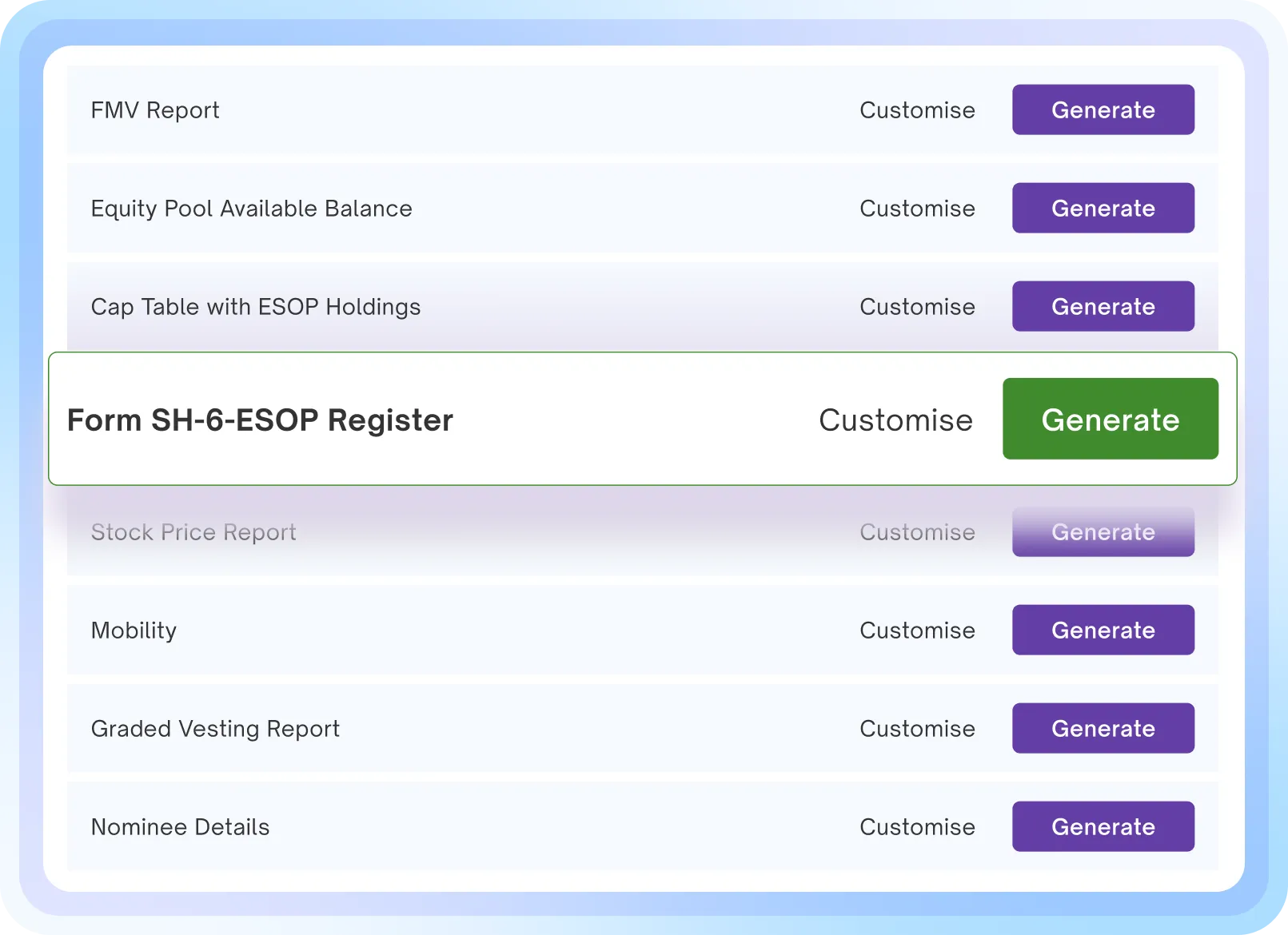
Generate Sh-6 Registers, due diligence reports, ESOP transaction ledgers, and vesting summaries in seconds. Whether you’re raising your Series A or planning a buyback, Qapita’s audit-ready documentation gives investors and legal teams the clarity they need.​
Go from Private to Public on a Click

Move from private to listed with a click ​

When you're ready to go public, Qapita is already ahead. Seamlessly align your ESOP structure with SEBI regulations, enable insider trading compliance, and prepare your ESOP policy and grant history for listing diligence.​
Manage Corporate Actions with Confidence

Splits, rights issues, buybacks. All built in.​

Corporate actions like stock splits, bonus issues, rights issues, and ESOP pool top-ups are fully supported. Apply changes across grant records, adjust vesting schedules, and reflect updates in your captable instantly, with automated logs and communications.​
Testimonials

Words from our valued customers

ESOP management
The ESOP module has made our equity management much easier. It’s easy to grant options, set up vesting, and communicate clearly with employees. Features like the e valuation slider, Exercise forms and periodic reports are helpful. It is an easy and time saving mechanism for the ESOP grants/allotment.
Vagdevi D
Corporate Functions-Compliance Officer Enterprise(> 1000 emp)
“Great team! Handheld us as we went through several iterations to get our team onboarded. Super easy to use. Very cost effective. Strongly recommend this to alternatives.”
Gaurang Shah
CEO and Founder, Mailmodo
Working with Qapita was a truly positive experience. The reports they provided for our PPA and valuations were thorough, accurate, and audit-ready, making our compliance work much smoother. We genuinely appreciate their professionalism and dedication and would gladly recommend their services to others seeking reliable valuation expertise
Ankur Sharma
Chief Financial Officer, Boat
Qapita has helped us in drastically improving our employee engagement on our Employee equity front. Equity payslips and valuation slider are really useful.
Prashant Kumar
Co‑founder, Zingbus
The simple process and the functions are easy to work and use with.
We used to manage ESOPs manually — juggling spreadsheets, email trails, and legal documents. It was tedious and prone to errors. Qapita has centralized the entire process, making it faster, more accurate, and far easier to manage. Reporting is smoother, compliance is stress-free, and our employees now have a much clearer understanding of their equity — which has boosted engagement significantly.
Ritika K.
People and Culture Manager,
Small-Business (50 or fewer emp)
“In Qapita, we have found a partner that supports us with all aspects related to ESOPs from plan review to employee education. ... Qapita's platform and their interactive employee sessions on communicating ESOPs effectively ... have been very helpful.”
Ginu Nair
VP HR, Zetwerk
Qapita Works With Companies Across the Globe From Seed Stage to Listing and Beyond

Establish Day-One Compliant ESOPs

Establish compliant, scalable ESOPs from day one, ready to support your private company's rapid expansion.
Metrics

Helping you elevate your equity management

Customers
2400
Stock Plans Value
$16bn+
Equity Value
$67bn+
Employees
500,000+
Other Offerings

Solutions for every other equity challenge

Employee Liquidity Programs

Enable structured liquidity events through buybacks and surrender programs, empowering employees without waiting for an IPO.

Valuations

Get full-spectrum, audit-grade valuations from in-house SEBI-Registered experts, built for Indian compliance.

ESOP/SAR Scheme Design and Structuring

Design and rollout ESOP/SAR schemes aligned with your growth, governance, and compliance needs, backed by expert insights.
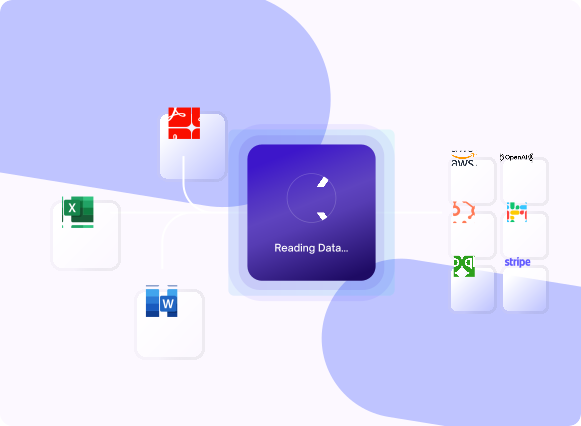
Integrations

Our Integrations

Lorem ipsum dolor sit amet consectetur. At ullamcorper luctus facilisi gravida turpis vel morbi mollis. Pharetra molestie at sed vulputate.
FAQs

Frequently asked questions

What is an ESOP and why should my private company have one?​

An ESOP (Employee Stock Option Plan) is an equity compensation program that grantsemployees the right to purchase company shares at a predetermined price (called the strikeprice) on or after a vesting period. For private companies in India, ESOPs serve as powerfultools to attract top talent, improve employee retention, and align employee incentives withcompany growth without immediate cash outflows. They're especially valuable for startupscompeting with larger companies for skilled professionals.

Can an early-stage startup issue ESOPs?​

Absolutely. Early-stage startups benefit the most from ESOPs because they offer equity-based compensation when cash is limited. Many seed and Series A companies in Indiastructure ESOPs as part of their employment packages to compete with established firms.Qapita helps establishing an ESOP plan with proper governance, board approvals, andvaluation documentation from day one.

How are ESOPs taxed in India?​

ESOP taxation in India involves three events: (1) Grant (typically no tax), (2) Vesting (tax triggered on the difference between FMV and strike price under Section 17(2AA)), and (3) Exercise/Sale (capital gains tax). Employees may also face TDS obligations. The tax treatment depends on the instrument type and vesting schedule. Qapita provides personalized tax guides for each employee showing their exact tax liabilities at each stage.

What is fully diluted equity and why does it matter for ESOPs?​

Fully diluted equity assumes all convertible instruments (options, SAFEs, convertibles, warrants) are exercised. For ESOP allocation purposes, this is critical. A founder's effective ownership is calculated on a fully diluted basis, not just current shares outstanding. Investors demand this transparency. Qapita's platform auto-calculates fully diluted caps tables as you model new rounds or ESOP expansions.​

How do I ensure ESOP compliance during due diligence for funding?​

Investors scrutinize ESOP documentation heavily. You need: a valid, approved plan, consistent valuations, complete grant records with signatures, accurate cap table integration, clear vesting terms, and audit trails. Qapita generates SH-6 registers, due diligence reports, vesting summaries, and transaction ledgers on demand, everything investors want to see.​

How does Qapita integrate ESOP management with cap table management?​

Your cap table documents all ownership: founders, investors, option holders. ESOPs are a critical cap table component. Qapita integrates ESOP issuance with cap table updates automatically. When you issue a grant, the option pool is updated, dilution is calculated, and founder equity percentages adjust in real time. This eliminates the spreadsheet chaos that leads to fundraising delays.

Can Qapita help us design an ESOP plan from scratch?

Absolutely. Whether you're issuing your first grants or restructuring an existing program, Qapita supports this through our consulting team and platform. We help you determine pool size, vesting schedules, strike price methodology, instrument type (ESOP, SAR, Phantom Stock), and plan rules aligned with your company stage, investor expectations, and retention goals.

What equity instruments does Qapita support for Indian private companies?​

Qapita supports all major instruments: ESOPs (most common and tax-advantaged under Section 17(2AA)), SARs (Stock Appreciation Rights for flexibility), and Phantom Shares (when you can't issue actual equity). Each has different tax and legal implications, and our platform helps you choose the right one for your situation.

Will Qapita help us with future IPO preparation?​

Yes. Qapita was designed with IPO readiness in mind. Your private company ESOP structure seamlessly transitions to SEBI-regulated listed company rules when you go public, no costly restructuring, no data migration headaches. Your grant history, valuations, and compliance documentation remain clean and audit-ready throughout the journey.

Can employees exercise their options before an IPO or acquisition?​

Modern private companies enable this through liquidity programs. Qapita supports periodic buybacks and surrender programs where employees can realize value from vested options without waiting for a full exit. This makes equity immediately valuable and improves retention and satisfaction.​
ESOP Management for Private Companies 101

What is ESOP management for private companies?​

ESOP management is the operational framework to run employee stock option programs correctly across their complete lifecycle. From initial plan design through grant issuance, vesting tracking, exercise, and eventual liquidity events. For private companies specifically, ESOP management means maintaining Companies Act 2013 compliance, securing Board/Shareholder approvals, managing professional valuations, and keeping documentation audit-ready, all while scaling hiring rapidly and preparing for eventual fundraising or exit.​

Private companies face unique ESOP complexity: no regulatory body (like SEBI for listed companies) provides clear rules, so companies must build their own compliant frameworks. But this flexibility is also an opportunity for you to design ESOPs tailored to your stage, investor expectations, and retention strategy.​

Common ESOP structures for Indian private companies​

  1. ESOPs (Employee Stock Option Plans): Give employees right to buy shares at fixed strike price after vesting. Tax-advantaged under Section 17(2AA) if FMV-based and properly approved. Standard: 4-year vesting, 1-year cliff. Employees own real shares after exercise. Best for startups planning eventual IPO.​
  2. SARs (Stock Appreciation Rights): Cash compensation equal to share price appreciation. No actual shares issued. Useful when legal constraints prevent share issuance or when you want to limit dilution. Less retention effect (employees don't own shares). Taxed as cash compensation.​
  3. Phantom Shares: Contractual promises to pay cash based on company valuation at exit. No shares issued. Completely cash-settled. Useful in PE-backed structures or complex ownership scenarios. Maximum flexibility but requires clear valuation definitions.

How stock options work in India​

The ESOP lifecycle in India typically follows this path:​
1

Grant (ESOP issuance)

The company issues an ESOP grant specifying number of options, strike price (usually Fair Market Value at grant date), vesting schedule, expiration date, and terms. Board approval is required. The strike price is critical, it must be based on professional FMV valuation to comply with Section 17(2AA)and avoid tax disputes.​
2

Vesting (earning ownership gradually)

Over the vesting period, employees earn the right to exercise options. Standard structure: 4-year vesting with 1-year cliff (nothing vests year 1, then 25% annually). Other structures: monthly vesting, quarterly vesting, milestone-triggered, performance-based. Cliffs are important for retention, they encourage employees to stay at least 1 year to earn any equity.​
3

Exercise (buying shares)​

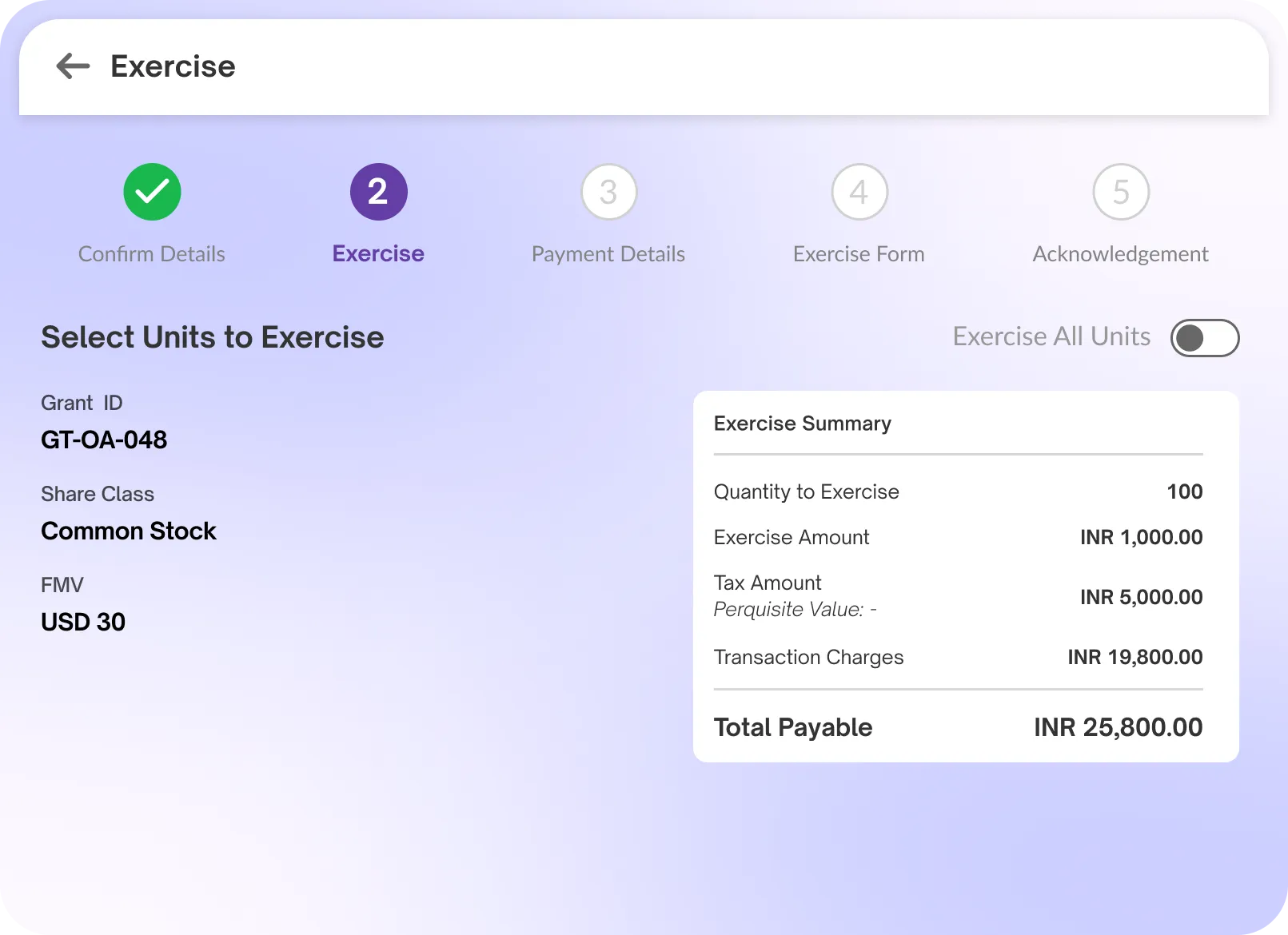
Once vested, employees can exercise by paying the strike price and receiving share certificates. Not all employees exercise immediately, some wait for better tax outcomes or when liquidity is closer. In India, employees paying the strike price have no taxable event at exercise (tax already paid at vesting).​​
4

Liquidity (realizing value)​​

Employees can only sell shares when liquidity exists: IPO (going public), acquisition, tender offer (company buyback), or approved secondary sale. Until then, shares are restricted. Modern companies enable periodic buybacks to give employees interim liquidity and proof that equity has real value.​​

Why private companies in India use ESOPs​

For Indian startups and growth companies, ESOPs solve multiple business problems simultaneously:​

Scale Your ESOPs From Startup to Venture

Design equity plans built for the startup hustle, ready for every stage of venture-scale growth.