


ESOP Management for Listed Companies

ESOP management with SEBI-regulated workflows. Trusted by India’s listed companies.​
India’s growing pool of publicly listed tech and traditional firms require robust ESOP infrastructure aligned with SEBI regulations and insider trading policies. Qapita brings simplicity and compliance under one roof.
blue bg
G2 Grid® for Equity Management Software | Summer 2025

Recognized as a Global Leader on G2

We are ranked the best in Customer Satisfaction, Enterprise and Mid-Market.

Why listed companies in India choose Qapita for ESOP management​

Built for listed-company ESOP complexity​

Listed companies in India operate under heightened governance, disclosure, and audit expectations. Qapita is built to manage employee stock option plans (ESOPs) across grants, vesting, exercises, lapses, and cancellations, supporting large employee bases and frequent transactions with accuracy, consistency, and full traceability.​

Designed to support SEBI-regulated ESOP processes​

Qapita supports ESOP programs governed by the SEBI (Share Based Employee Benefits and Sweat Equity) Regulations, 2021 and helps centralise ESOP data required for board oversight, statutory audits, and SEBI (LODR) disclosures. Maintain structured records, approval histories, and audit trails so ESOP activity always remains review ready and disclosure-ready.​

Clear visibility into dilution and shareholding impact​

Understand how ESOP exercises and pool changes impact equity dilution, promoter shareholding, and overall capital structure. By linking ESOP activity with your cap table, Qapita enables informed planning, accurate investor communication, and confident responses to audit or regulatory queries, using a single source of truth.​

How Qapita manages ESOP for listed companies​

Regulatory-Aligned ESOP Plan Implementation

Structure equity the SEBI compliant way from day one​

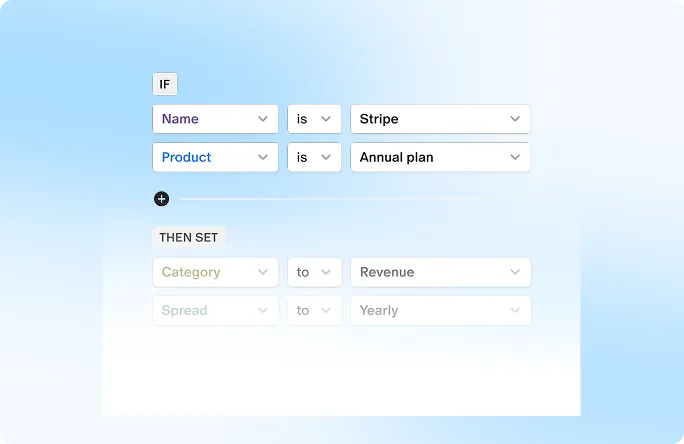
Qapita ensures your equity compensation plans are built to comply with SEBI, FEMA, IRDA, and many more regulations. From drafting to digitization, the platform supports the full lifecycle of ESOP schemes, including ESOP Trusts, SAR, or direct plans with configurable logic for vesting, exercise price, eligibility, lapse, and much more. Whether you're adopting a new scheme or digitizing legacy ones, you get a compliant setup from day one.​
Grant Issuance & Approval Workflows

Issue grants with confidence and control​

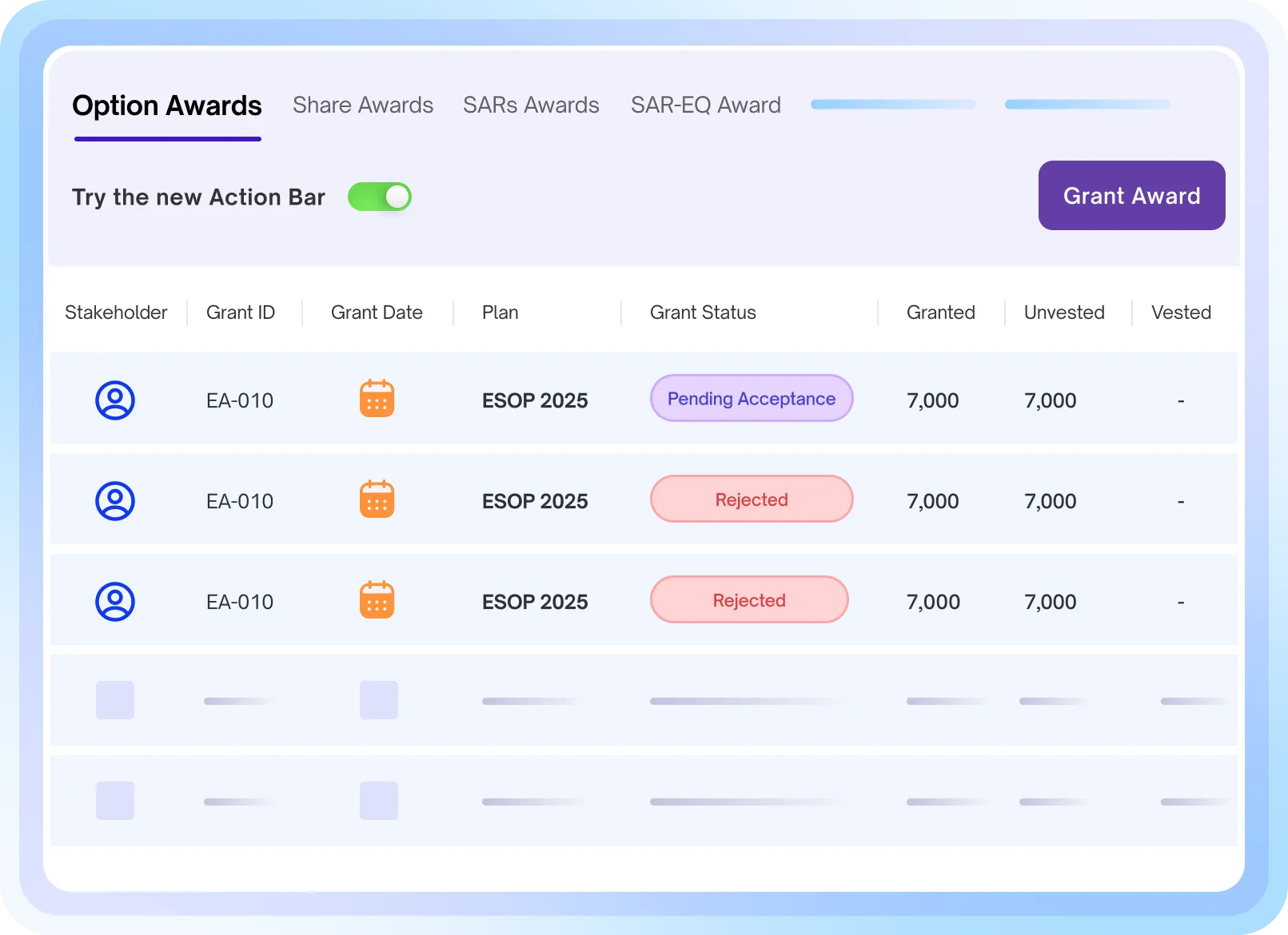
From custom-branded grant agreements to automated approval flows, Qapita simplifies the full grant issuance process. Create grant templates, assign maker-checker roles, collect board consents, and get digital signatures, all through a secure, auditable workflow. Support for international employees is built in, so you can issue compliant grants across borders with no additional tools. Every step is streamlined, controlled, and globally scalable.​
Vesting, Exercise, and Payouts

Make equity liquid, trackable, and real​

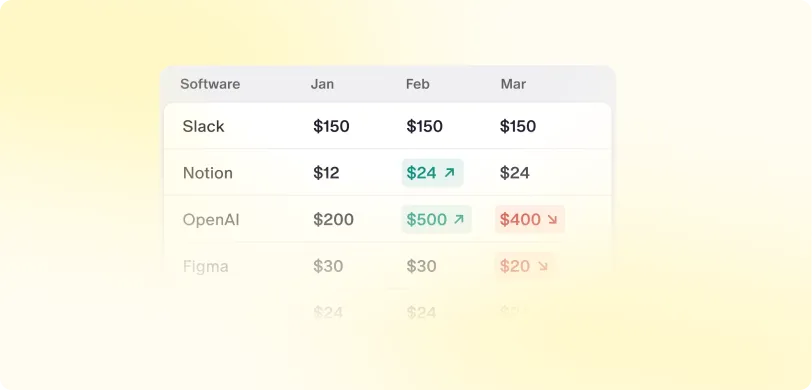
Automate vesting schedules, exercise triggers, and lapses with rule-based logic. Qapita supports both on-market and off-market exercises using payment gateways, payroll integration, and generates real-time tax computation reports for employees. From sell-to-cover mechanics to TDS tracking, you get a streamlined payout pipeline, whether you’re processing 5 grants or 50,000.​
Employee Experience & Ownership Portals

Equity that’s understood, not just granted​

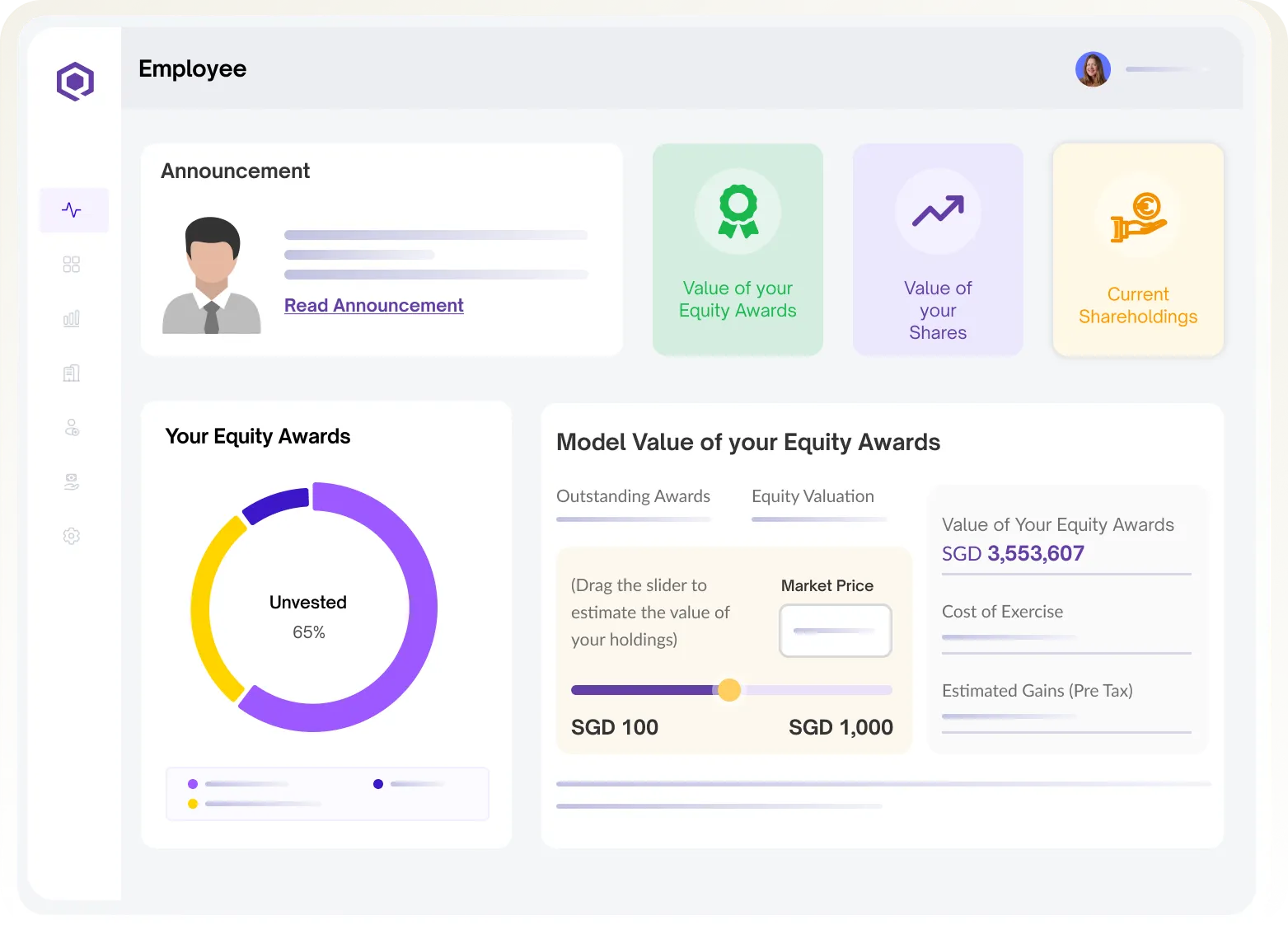
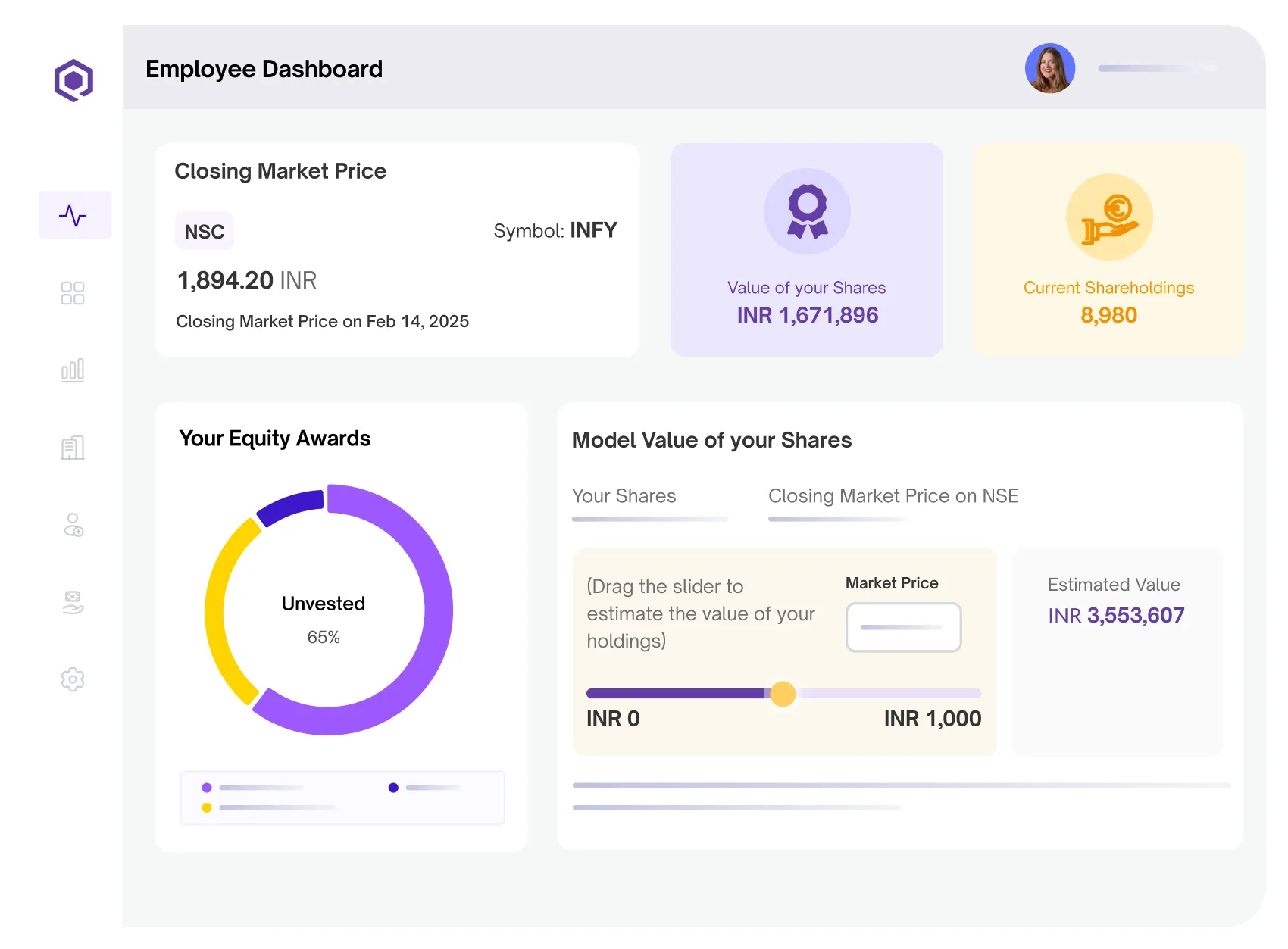
Qapita helps you foster trust and alignment by making equity tangible for employees. Customizable dashboards let you communicate equity in your company’s voice. Employees can see updated FMV (based on opening and closing prices) the moment trading ends, milestone updates, and personalized views that show how equity grows with the company. Qapita enables you to run education sessions, share FAQs, and embed help modules, so your workforce knows the value of what they own.​
Reporting & SEBI Disclosures

From boardrooms to stock exchanges, be diligence ready​

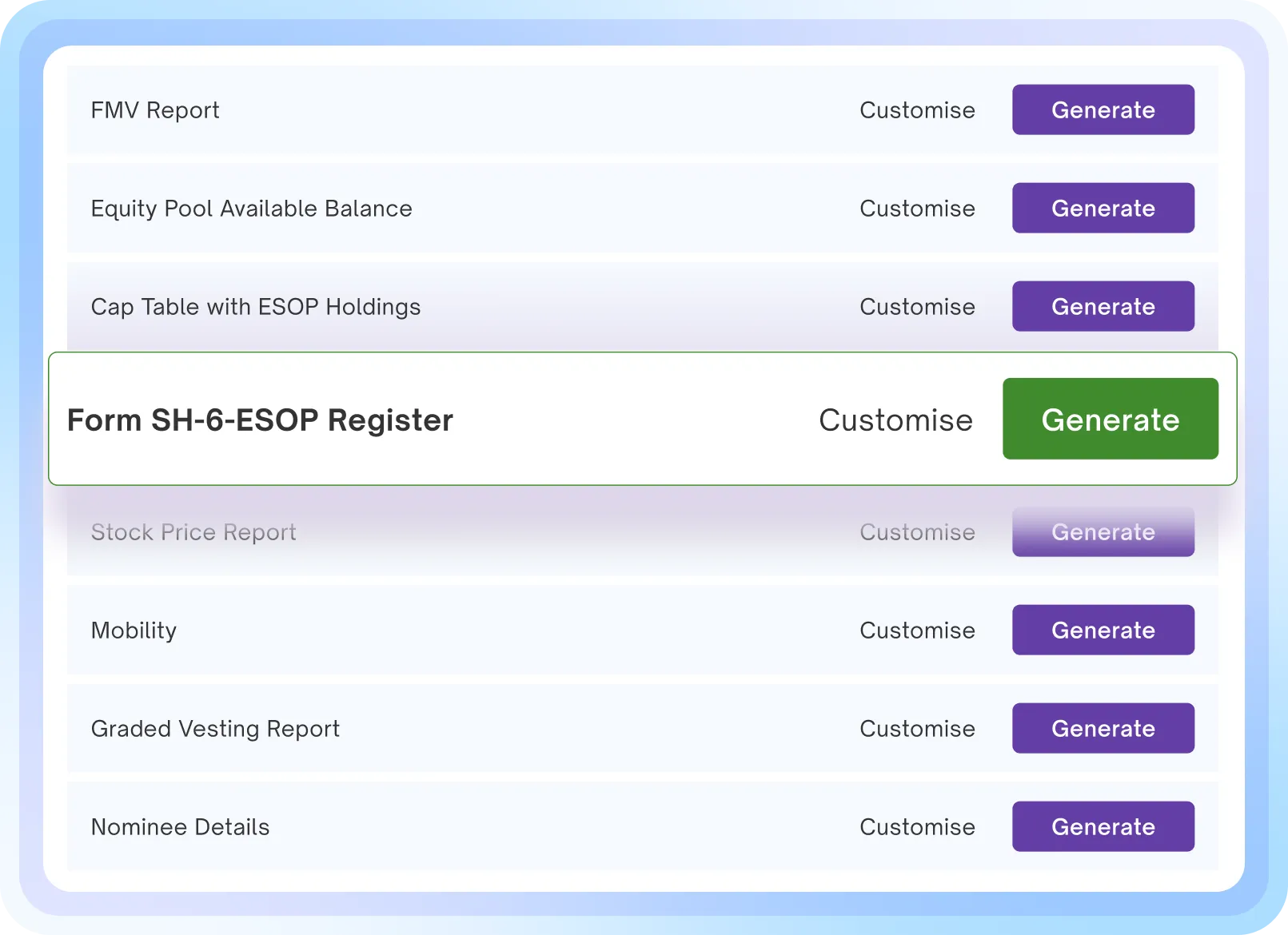
Generate annual SEBI ESOP disclosures, IND-AS 102 expense reports, SH-6 registers and employee-level statements in a click. Qapita’s reporting suite is tailored for listed environments, supporting both internal audits and external filings. Track option pool utilization, grant history, and corporate actions with data that’s always complete and accurate.​
Real-time Exercise with NSE/BSE Prices

Real time compliant ESOP exercises with complete visibility

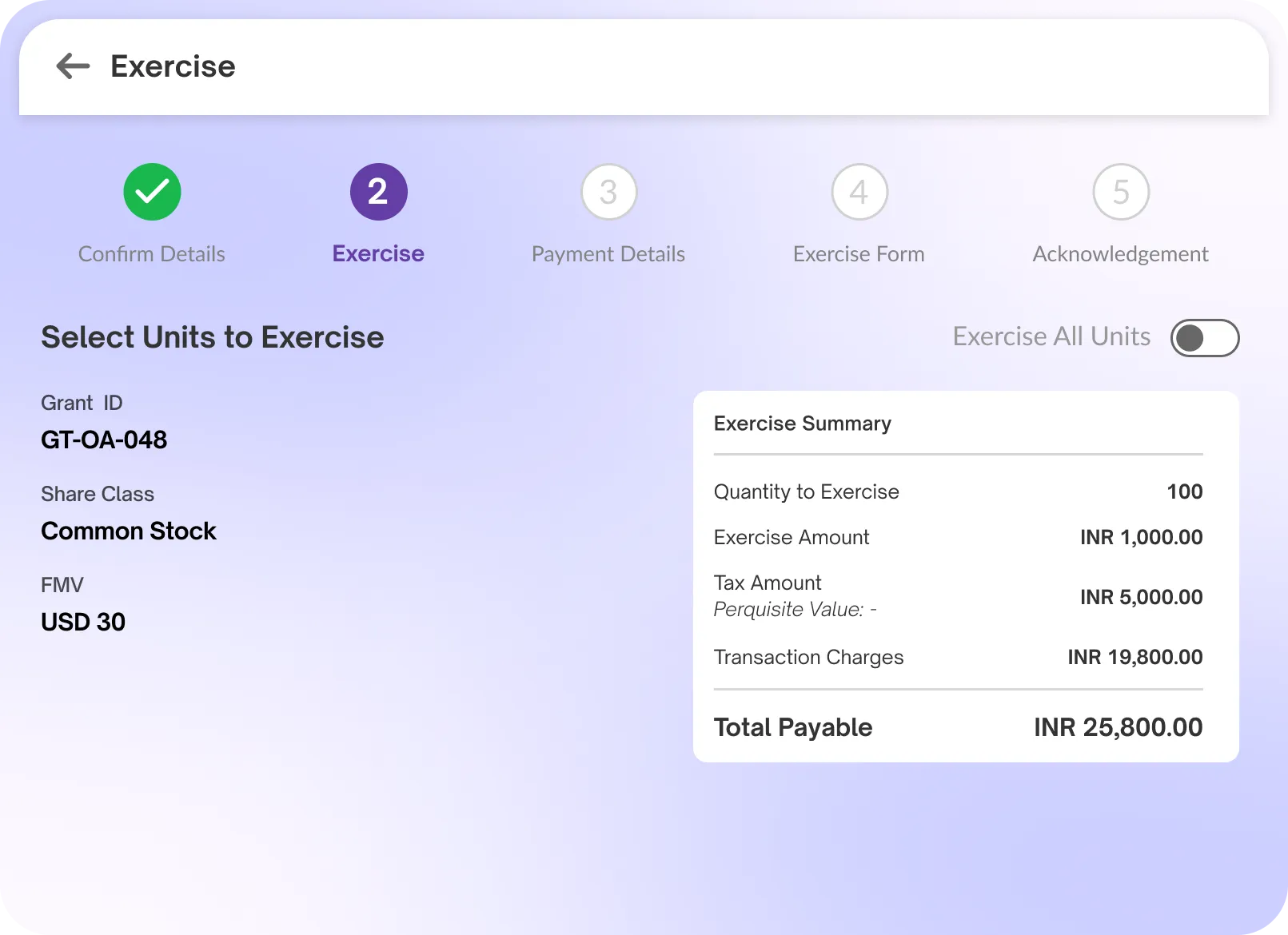
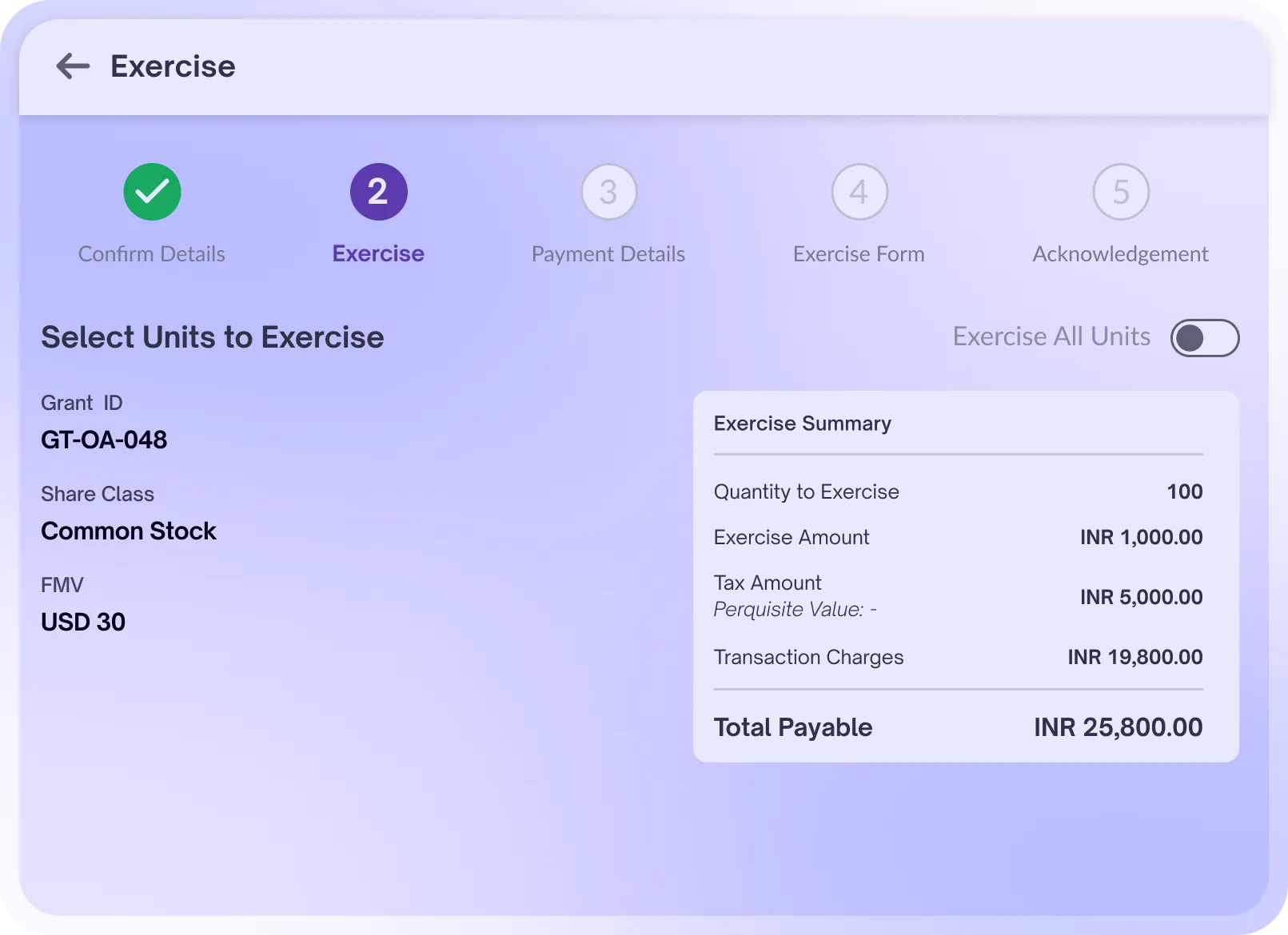
Enable employees to seamlessly exercise their ESOPs in real-time with automated workflows, while providing stakeholders with live dashboards to track participation, tax implications, and settlement progress instantly. Live prices, real-time tax rates, exact exercise and tax amounts, payment, reconciliation, we do it all under one platform.​
Testimonials

Words from our valued customers

The simple process and the functions are easy to work and use with.
We used to manage ESOPs manually - juggling spreadsheets, email trails, and legal documents. It was tedious and prone to errors. Qapita has centralized the entire process, making it faster, more accurate, and far easier to manage. Reporting is smoother, compliance is stress-free, and our employees now have a much clearer understanding of their equity - which has boosted engagement significantly.
Ritika K.
People and Culture Manager,
Small-Business(50 or fewer emp.)
Equity pay slips are fabulous!
We are particularly loving the equity pay slip feature! It is so nice to have something like pay slip for esops. This has helped us improve our transparency levels for employees-seems like they value their esops more now!
Prashant J.
Senior Director
Enterprise(> 1000 emp.)
We entrusted the team with our complete Plan administration. scheme is being handled by highly experienced people.
Mona Cherian
President and Group Head Human Resources,
Thomas Cook
Solid Foundations
Qapita has been helping Ather Energy with their ESOP, SARs management. It becomes all the more important as Ather Energy just got listed and hence Qapita would also be facilitating liquidity events for our current and ex team-members.
Mayank D.
Lead- Tech Transformation
Enterprise(> 1000 emp.)
They have helped us effectively manage our ESOPs all digitally as well as organize our Captable. user interface is great.
Ankur Sharma
Chief Financial Officer,
Boat
Qapita Works With Companies Across the Globe From Seed Stage to Listing and Beyond

SEBI-Compliant ESOP Management for Your Listed Company

Manage your employee ownership plans with absolute accuracy and full SEBI compliance.
Metrics

Helping you elevate your equity management

Countries
60+
Listed Companies
180+
Employee Equity Under Management
US $28bn+
Equity Under Management
US $185bn+
Employee Owners Engaged
500,000
Equity Plans Designed
1400+
Other Offerings

Your complete equity journey starts here

ESOP Trust Formation and Trustee Services

Set up, govern, and operate SEBI- and Companies Act-compliant ESOP Trusts with confidence and strategic flexibility.

Valuations

Get full-spectrum, audit-grade valuations from in-house SEBI-Registered experts, built for Indian compliance.

ESOP Tax Guides

Simplify the entire tax journey, educating employees and streamlining finance team execution across all equity events.
Integrations

Our Integrations

Lorem ipsum dolor sit amet consectetur. At ullamcorper luctus facilisi gravida turpis vel morbi mollis. Pharetra molestie at sed vulputate.
FAQs

Frequently asked questions

How are ESOPs different for listed companies vs private companies in India?​

In India ESOPs in listed companies involve public market pricing, insider-tradingrestrictions, mandatory disclosures, shareholder approvals, and audit scrutiny, whereasprivate company ESOPs are governed mainly by internal policies and valuation reports. Listedcompany ESOP management requires tighter controls, real-time tracking, and SEBI-compliantreporting.​

Is Qapita compliant with SEBI regulations for listed company ESOPs?​

Yes. Qapita is designed to support SEBI (Share Based Employee Benefits) Regulations,including grant governance, vesting rules, exercise workflows, disclosure tracking, andreporting. The platform helps listed companies maintain regulatory compliance by design, notas an afterthought.

What happens to ESOPs when an employee exits a listed company?

​Unvested ESOPs generally lapse on termination, while vested options may be exercisedwithin a defined post-exit window, depending on the ESOP scheme. ESOP managementsoftware automatically enforces exit rules and updates records accurately.​

How does Qapita improve employee transparency around ESOPs?​

Qapita provides employees with self-serve dashboards showing vested and unvested options, vesting timelines, exercise eligibility, and ownership impact. This improves ESOP understanding, reduces HR queries, and builds trust in equity compensation.​

Is Qapita suitable for companies already listed or preparing to list?

Qapita is used by already-listed companies and by companies preparing for IPO readiness, helping structure ESOP data, clean up historical records, and ensure future-ready compliance before public market scrutiny.

How does ESOP management impact the cap table of a listed company?​

ESOP exercises, lapses, and issuances directly affect the cap table and shareholding pattern. ESOP management systems integrate with cap table software to reflect real-time ownership changes, dilution impact, and fully diluted shareholding accurately.​

How does Qapita handle complex vesting structures common in listed companies?​

Qapita supports cliff vesting, graded vesting, performance-linked vesting, and custom vesting rules at scale. Vesting is calculated automatically based on scheme rules, employee status, and dates, reducing manual errors and ensuring vesting data is always audit-ready.

How does Qapita reflect ESOP activity in the cap table for listed companies?

When ESOPs are exercised or lapse, Qapita updates the cap table in real time, ensuring accurate ownership, dilution, and shareholding patterns. This is critical for listed companies where ESOP movements directly affect public disclosures.​​

How does Qapita support ESOP scheme changes after implementation?​

Listed companies often update ESOP schemes due to regulatory changes orcompensation strategy shifts. Qapita supports scheme amendments, rule changes, andretrospective tracking, while preserving historical accuracy and audit integrity.

What are the risks of poor ESOP management in listed companies?​

Poor ESOP management can lead to SEBI non-compliance, incorrect disclosures,employee disputes, audit qualifications, and reputational risk. Automated ESOP managementsignificantly reduces these risks by ensuring accuracy and governance.​
ESOP Management for Listed Companies 101

What are ESOPs in listed companies?​​

Employee Stock Option Plans (ESOPs) in listed companies are structured equity compensation arrangements that allow eligible employees to acquire shares of a publicly traded company at a predetermined exercise price, subject to vesting conditions. Because the company’s shares are already listed and traded on the stock exchange, ESOPs in listed companies operate in a significantly more regulated and transparent environment compared to private companies​

Every ESOP-related action i.e. grant, vesting, exercise, lapse, or modification, has a direct impact on shareholding patterns, dilution, and statutory disclosures. As a result, ESOPs in listed companies are treated not merely as employee benefits, but as governance-sensitive equity instruments.​

How ESOPs work in listed companies?

The working of ESOPs in listed companies follows a structured and sequential lifecycle. First, options are granted to eligible employees under a formally approved ESOP scheme. These options do not immediately convert into shares, instead, they vest over a defined period based on time, performance, or a combination of both.​

Once options vest, employees are given the right to exercise them by paying the exercise price. Upon exercise, shares are either newly issued by the company or transferred from an existing pool, resulting in actual share ownership by the employee. Each of these steps must be accurately tracked because they affect ownership disclosures and fully diluted share capital.​

ESOP lifecycle in listed companies: from grant to share ownership​

The ESOP lifecycle in a listed company follows a clearly defined sequence, with each stage having ownership and reporting implications.​

ESOPs are a core part of equity compensation in listed companies​

Vesting periods and vesting structures of ESOPs in listed company

Vesting is one of the most searched and misunderstood aspects of ESOPs. In listedcompanies, vesting schedules are designed to encourage retention while balancingshareholder interests.​

Common vesting structures include multi-year graded vesting or initial cliff vestingfollowed by periodic vesting. Once defined, vesting schedules remain fixed unlessformally amended.​​

Accurate vesting tracking is essential because:​

  • Vested and unvested options are treated differently in disclosures​
  • Vesting impacts employee exercise rights​
  • Errors can lead to audit observations​

ESOP exercise rules in listed companies

Exercising ESOPs in a listed company involves more than paying the exercise price. Becauseexercises can affect shareholding disclosures and ownership records, listed companies oftenimpose defined exercise processes and internal controls.​​

Once exercised, shares are allotted or transferred to the employee, and the option ceases to exist.This conversion from option holder to shareholder is a critical equity event that must be reflectedaccurately in ownership records.​

ESOP trust structures in listed companies

Some listed companies administer ESOPs through trust-based structures. Under this model, sharesare held by a trust and transferred to employees when options are exercised.

​​While trust-based ESOPs offer operational flexibility, they also increase complexity around tracking,utilization limits, and transparency. This makes accurate record-keeping even more important.​​​

Taxation of ESOPs in listed companies

Taxation is one of the most searched ESOP topics. In listed companies, ESOP taxation generallyoccurs at two stages. First at exercise and later at sale of shares. The taxable amount depends onmarket value, exercise price, and holding period.​​

Because tax outcomes vary, employees and companies rely on accurate ESOP records tounderstand obligations and reporting requirements.​

See How Simple SEBI-Compliant ESOP Management Can Be

Simplify complex SEBI regulations with industry-leading, trusted workflows.