


 Equity management

 ESOP Management
- Fund management

 Liquidity Solutions
 - Fund managementESOP Consulting
- Fund managementFund Management



Effective communication around Employee Stock Option Plans (“ESOPs”) is not a procedural formality, it is a catalyst for cultivating an ownership mindset. When a company clearly communicates the rationale behind implementing an ESOP, employees feel more personally invested in the company’s success.
From onboarding and grant to vesting, exercise, allotment, and taxation, every stage of the ESOP lifecycle presents an opportunity to educate, engage, and empower employees. Organizations that leverage each of these moments effectively convert ESOPs from a compensation tool into a cultural driver.
When companies clearly articulate what ownership means, how equity works, where value is created, and what actions employees must take, ESOPs evolve from a compensation component into a powerful alignment tool. Transparent, timely, and structured communication not only builds trust but transforms ESOPs from a line item into a long term driver of motivation, retention, and value creation. It is not merely about explaining equity, it is about enabling belief in it.
Yet, despite the strategic importance of ESOPs, one critical aspect is often overlooked: clear and continuous communication across the entire ESOP lifecycle. Without this, even the most thoughtfully designed plans fail to achieve their intended objectives.
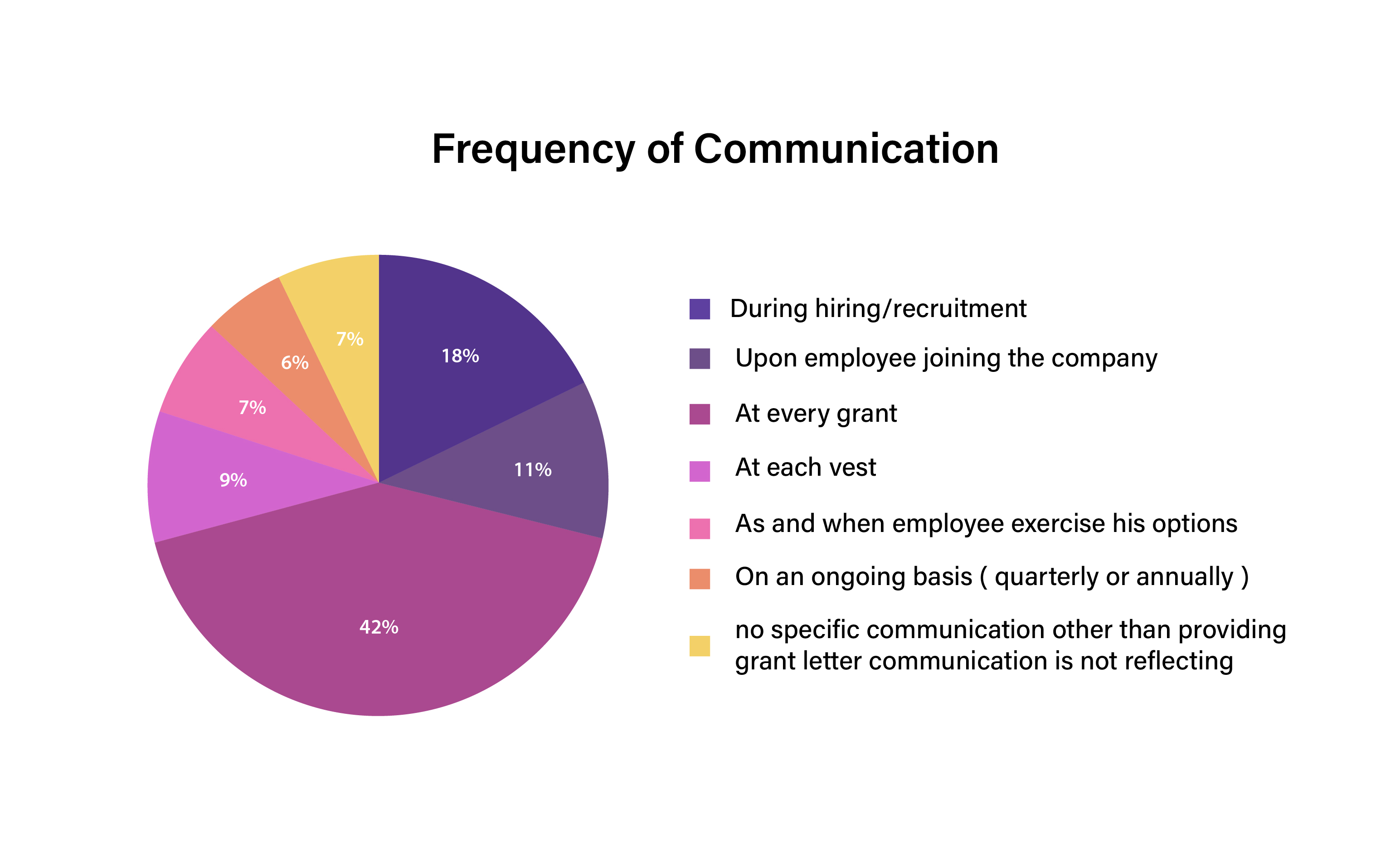
As per the Qapita ESOP Survey 2025, 6% of the companies (269 respondents) provide continuous communication which gives employees a sense of being part of the company’s growth journey and strong ability to achieve the objectives of equity-linked incentive plan. In contrast, 7% of companies provide no communication beyond issuing grant documents highlighting a significant gap in enabling informed and active employee participation. While companies invest substantial effort in structuring ESOPs, many fall short in addressing fundamental employee questions:
Without clarity on these aspects, ESOPs risk becoming misunderstood, under-utilized, and ultimately ineffective.
Employee communication strategies across the ESOP lifecycle:
The grant stage sets the foundation. However, companies dilute its impact by issuing grant letters dense with legal and financial terminology, while failing to communicate the underlying intent of the plan. This can be effectively addressed by creating a well designed Frequently Asked Questions (FAQ) document that simplifies ESOP fundamentals.
The FAQ should clearly explain:
Grant letters should also clearly specify:
In addition, employee townhall sessions, such as those conducted by Qapita, play a critical role in driving understanding. These sessions allow employees to ask questions directly, with taxation related concerns being the most common. A recurring misconception observed is that tax is payable at the time of grant. Addressing such queries upfront sets the right expectations and reinforces the link between long term performance, company growth, and value creation for employees and shareholders alike.
If the grant stage builds awareness, the vesting stage sustains engagement. Yet, this phase is often overlooked. The Qapita survey indicates that only 9% of companies proactively inform employees when options vest. This gap is particularly evident in unlisted companies.
When employees are unaware that vesting conditions have been satisfied, they may mistakenly believe they have no ownership rights, leading to disengagement and potential attrition.
This can be addressed through:
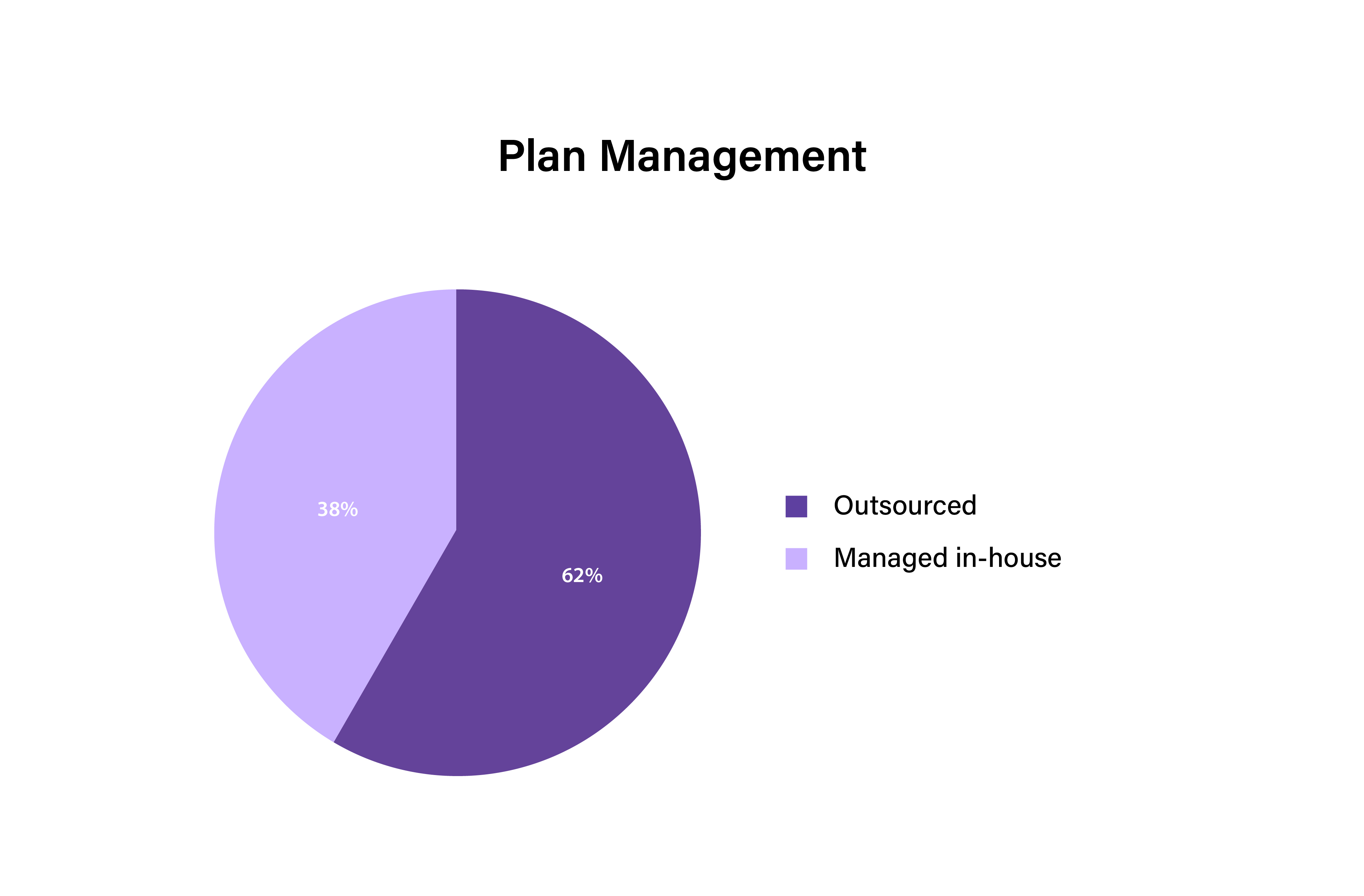
As per Qapita’s survey, approximately 62% of companies outsource ESOP data management to ensure transparency, regulatory compliance, and operational efficiency. Among them, 59% prefer web based platforms that provide employees with real time access to their equity data. These platforms significantly enhance engagement - when employees see tangible value building over time, they are more likely to remain invested in the company’s success.
This is particularly relevant in case of unlisted companies where the employees are aware of the company’s performance but unaware of its valuation due to the absence of fair market value disclosures. Such companies can utilize web-based platforms to update fair market value periodically, giving employees a better understanding of the worth of the options they hold and keeping them motivated.
The exercise stage is often where communication gaps have the greatest impact, especially in unlisted companies where liquidity is uncertain. Employees may have fully vested options yet lack clarity on how and when those options can be monetised.
At this stage, companies must clearly communicate:
Without this guidance, employees are left with uncertainty, diminishing the perceived value of ESOP. This is particularly relevant when employees hold vested options for a long time without any liquidity event. In such cases, many companies opt for cash settlements. Clearly communicating such intentions can give employees confidence that they will eventually be able to realize value from their options.
A large cement company (part of a conglomerate) began granting ESOPs in 2016. By the time the company approached its IPO, employees had completed both grant and vesting stages.
Yet, during IPO related communication sessions, employees raised basic questions around vesting and exercise. Many lacked clarities on timelines and processes. This highlighted how the absence of continuous communication over time leads to low awareness even among long tenured employees. Once dedicated employee sessions were conducted by Qapita, employees gained clarity on exercise timelines and processes. Additionally, the availability of a technology platform enabled smooth execution, resulting in high participation and improved turnaround.
The success of an ESOP plan does not lie in its structure alone but in how well it is understood. Clear, transparent, and constant communication is necessary because it builds trust, reduces confusion, and keeps employees consistently engaged and aligned with company goals. Effective communication transforms shares on paper into a shared sense of purpose, ultimately building a strong long-term ownership mindset.
Therefore, companies must move from one-time communication to continuous engagement across all three stages:
In a competitive talent landscape, companies cannot afford to let ESOPs remain misunderstood.
Clarity is not optional, it is the multiplier of ESOP effectiveness.