

 Equity management

 Companies
- Fund management

 Funds
Funds - Fund managementFund management
- Fund managementFund management




A sponsor’s deadline can shape the pace of negotiations with a special purpose acquisition company (SPAC). Founders need to establish whether the proposed timetable leaves enough room to prepare the business for public ownership.
American Exceptionalism Acquisition Corp. A’s August 2025 filing specified a 24-month combination window, extending to 27 months if it signed a definitive agreement within the initial period, subject to other permitted changes.
A target considering such a proposal must compare the remaining time with its audit and disclosure work. Unresolved ownership records can add further work to the merger calculations.
Use this guide to evaluate the SPAC process and its execution demands, then compare them with the company’s financing needs and public-market readiness.
A SPAC is a shell company formed to raise capital through an IPO and complete a business combination with an operating company. Investors initially fund the acquisition vehicle before it identifies the business it will acquire.
The later business combination is commonly called a de-SPAC transaction. After completion, the combined public company conducts the operating business.
The sequence distinguishes a SPAC from a traditional operating-company IPO. The shell raises public money first. The private business joins the listed structure through a later transaction.
At the shell stage, investors evaluate the sponsor, offering terms, search strategy, and protections attached to their investment. Once a target is identified, they can assess the proposed operating business and transaction economics.
For the target company, an existing trust account offers a potential funding source. The amount ultimately available depends on redemptions, expenses, and any additional financing.
The parties bring different rights and incentives to the transaction. Map those interests before evaluating the headline valuation.
A PIPE can add committed capital, subject to its conditions, but every transaction does not include one. Existing shareholders may roll their holdings into the combined company, receive cash, or accept a combination of consideration.
SPAC activity expanded sharply during the 2020–2021 market cycle. The structure appealed to companies seeking a negotiated transaction with a sponsor and access to public-market capital.
The appeal also created incentives to emphasize projected growth. Some businesses entered public markets before demonstrating the operating performance investors expected.
Foley & Lardner’s September 2025 analysis discusses the subsequent failures and renewed attention to governance, diligence, and business fundamentals. The useful lesson for founders is to assess whether the proposed financing can support a credible operating plan through closing and beyond.
The popularity of the structure in a particular market cycle provides little assurance about an individual company’s readiness.
A SPAC transaction involves separate fundraising, target-selection, negotiation, disclosure, and closing stages. Each stage changes what the parties know and which conditions remain unresolved.
The sponsor forms the legal entity and supplies capital for initial expenses. Sponsor securities and other arrangements establish the sponsor’s potential economics.
The sponsor’s investment is generally at risk if a combination fails to occur, although the precise rights depend on the documents. Founder shares, private-placement securities, and expense arrangements should all be reviewed.
For a target company, the sponsor’s financial position helps explain its incentives. A large reward for completing a transaction can create a different objective from maximizing long-term shareholder value.
The SPAC sells securities to public investors and lists on an exchange. Offerings often involve units containing a share and a warrant component, although structures vary and some use different combinations.
Proceeds are generally placed in a trust account under the offering terms. Permitted investments, withdrawals, redemption rights, and liquidation provisions are specified in the documents.
At this stage, the shell has gone public. The target operating company remains private until the later business combination closes.
The sponsor searches for a business within the period established in the SPAC’s governing documents. A window of roughly 18–24 months is common, but extensions and alternative deadlines depend on the vehicle.
For example, FutureCrest’s 2025 registration statement describes a 24-month period and provisions for seeking an extension. Use the actual documents rather than assuming every SPAC follows an identical deadline.
The target should evaluate the sponsor’s sector experience, prior transactions, investor relationships, and ability to secure financing. Investigate post-merger performance as well as the number of deals completed.
The target and SPAC negotiate the business combination. The agreement establishes valuation, consideration, closing conditions, and the treatment of existing securities.
Terms commonly requiring close attention include:
The target is negotiating an acquisition structure and financing package together. Changes to one part can affect the others, including dilution and the cash available to fund operations.
A de-SPAC transaction commonly involves a shareholder vote, although the applicable approval and redemption process depends on the legal structure and listing requirements.
Voting and redemption are separate decisions. When a vote occurs, a public shareholder can generally vote in favor of the transaction and still redeem eligible shares, subject to the documents and procedures.
This separation explains why an approved transaction may deliver substantially less cash than the original trust balance. Review the redemption deadline, exercise procedure, and minimum cash condition.
Approval establishes support under the voting rules. It does not establish how many public shareholders will remain invested.
The transaction closes after the parties satisfy or waive the applicable conditions. The resulting public group owns the operating business.
The legal structure may use a surviving company, subsidiaries, or a new holding company. Avoid assuming the shell always disappears or the target always survives unchanged.
The combined company must meet its public reporting and governance obligations. For a US domestic issuer, these generally include periodic Securities and Exchange Commission (SEC) filings, financial reporting controls, and relevant executive-compensation disclosures. Reporting details vary by issuer status.
A SPAC that reaches its deadline without completing a combination or securing an extension generally winds up and redeems public shares under its governing documents.
The sponsor may lose its investment, and warrants can expire without value. Public shareholders’ redemption amounts depend on the trust assets and permitted deductions.
These consequences create deadline pressure. A sponsor close to expiration may be particularly motivated to sign a transaction. Founders should assess whether the proposed timetable leaves enough time for diligence, financing, and regulatory work.
Both routes can produce a publicly traded operating company. They differ in how the transaction is negotiated, marketed, financed, and completed.
Table: Founder-relevant differences between a SPAC combination and a traditional IPO.
A SPAC combination may move quickly after signing when the target already has reliable financial statements, equity records, and a prepared reporting team.
The timetable still depends on diligence, audits, regulatory review, shareholder materials, financing, and closing conditions. Remediation can remove any expected timing advantage.
Compare realistic schedules for your company. An optimistic transaction calendar is useful only if the required work has owners, resources, and achievable deadlines.
A SPAC transaction starts with a negotiated valuation. PIPE investors and other financing parties may test or renegotiate the economics.
A traditional IPO’s offering price reflects market conditions, underwriting work, and investor demand during the offering process.
Neither route fixes the value of the shares after listing. In a SPAC combination, changes to financing terms, redemptions, and dilution can also affect what existing holders receive. Compare retained ownership and realizable proceeds alongside the announced valuation.
Both routes require substantial disclosure and financial preparation. A de-SPAC transaction adds disclosure about the combination, sponsor economics, conflicts, dilution, and the treatment of existing securities.
Projections require particular care. Their use carries disclosure obligations and liability exposure, so a SPAC should not be presented as a way to avoid scrutiny of forecasts.
Work with securities counsel to identify the filings, financial statements, review process, and issuer-specific requirements. Treat forecast assumptions as information the company may need to defend publicly.
Traditional IPO proceeds depend on the final offering size and price. SPAC proceeds depend on the trust cash remaining after redemptions, committed financing, expenses, and other uses of funds.
Consider an illustrative SPAC with $300 million in trust. If holders redeem 70% of the shares represented in that balance, $90 million remains, ignoring trust earnings, taxes, and other adjustments.
A $100 million PIPE would bring the combined amount to $190 million before transaction expenses, debt repayment, or cash paid to selling shareholders. The operating company’s usable cash could be lower.
Model the complete sources and uses. The trust balance alone is an inadequate funding forecast.
The value of a SPAC route depends on the sponsor, financing package, market conditions, and the company’s readiness. Evaluate each proposed advantage against its conditions.
A well-structured transaction may offer a negotiated financing and listing process suited to the company’s circumstances.
These benefits depend on the actual parties and documents. Sponsor involvement alone does not establish operating expertise or reliable access to capital.
The structure introduces costs and uncertainties founders must examine alongside the listing opportunity.
Cash-paid fees reduce proceeds. Fees paid in shares create dilution. Keep those effects separate in the model so the analysis does not double-count them.
Before a transaction, founders, investors, and employees may hold shares, options, and convertible interests. The combination can add public SPAC shares, sponsor securities, PIPE shares, warrants, and contingent earnout shares.
Start with the actual closing capitalization. Then model potential future issuance under warrants, earnouts, and employee equity arrangements.
Redemptions reduce cash and the number of public shares remaining. If sponsor shares remain fixed, their relative economic burden can increase. A high valuation therefore does not necessarily mean existing holders retain favorable economics.
Compare ownership under multiple redemption and financing scenarios before agreeing to the transaction.
The 2020–2021 boom produced many transactions followed by weak operating or market outcomes. The causes varied, including optimistic projections, dilution, governance problems, and businesses requiring more capital than expected.
A 2025 Columbia Business Law Review analysis examines the incentive conflicts between sponsors and investors who remain through the combination. Those conflicts help explain why completing a transaction and producing attractive long-term returns are different objectives.
For founders, examine the sponsor’s portfolio after closing. Review funding shortfalls, forecast performance, governance disputes, and shareholder outcomes. Deal-completion experience is only one part of the record.
Several features affect a SPAC combination’s ownership and financing in ways that require separate modeling. Review the documents for each feature rather than relying on its label.
The sponsor promote refers to founder equity or similar economics granted to the sponsor for organizing and completing the transaction.
Its size and conditions vary. Some sponsor interests may vest on closing, while others depend on performance or other events. A 2025 SPAC registration statement illustrates how sponsor interests and liquidation deadlines can create incentives to complete a combination.
Consider forfeiture, vesting, lockup, and performance provisions together. A nominally smaller promote may still carry stronger rights or earlier liquidity.
A warrant gives its holder a contractual right to buy shares on specified terms. Public and private-placement warrants can have different exercise, redemption, and transfer provisions.
Warrants do not automatically become shares when the stock price rises. Exercise depends on the contract and holder action, and some warrants expire unexercised.
Review exercise prices, cashless-exercise provisions, issuer-redemption rights, expiration dates, and accounting classification. Model potential dilution separately from cash the company might receive through exercise.
Redemption allows eligible public shareholders to return shares for a proportionate amount from the trust under the offering documents.
For the target, the principal consequence is a change in available cash and closing ownership. High redemptions may require replacement financing, revised terms, or reconsideration of the minimum cash condition.
Review what happens if the cash condition fails. A contractual protection has limited practical value if the company waives it without a workable funding plan.
PIPE financing involves a private investment in securities of the public company connected with the combination. It can supplement trust proceeds and provide another assessment of the proposed economics.
The terms may differ from those offered to other shareholders. Examine pricing, security type, closing conditions, registration rights, and any additional protections.
A signed commitment improves visibility only to the extent its conditions are achievable. Model the consequences if some financing is delayed, reduced, or unavailable.
Earnouts provide additional consideration if specified performance or share-price conditions are met. Their triggers affect potential ownership and the incentives created by the transaction.
Lockups restrict sales for a period or until agreed conditions occur. They affect liquidity rather than the underlying number of shares.
Review who receives earnout consideration, how targets are calculated, and whether vesting creates compensation consequences. For lockups, check release conditions, exceptions, and their interaction with securities-law restrictions.
A SPAC may fit a company ready to operate publicly and able to support its plan under realistic financing scenarios. It is a weaker fit when the transaction depends on optimistic forecasts or receiving every dollar of the original trust.
Look for evidence of readiness in the business and the transaction terms.
These conditions support further evaluation. They do not remove market or execution risk.
Certain gaps make a compressed timetable particularly difficult.
Address those gaps before committing to a public transaction schedule. Listing does not resolve underlying reporting or business-model problems.
Evaluate the proposal with a written diligence list. The board and advisors should be able to trace each answer to evidence or a negotiated term.
Review:
Then test the operating plan under a downside case. For example, if usable proceeds are 40% below the base case, identify the hiring, investment, or financing changes required. The percentage is an illustrative stress test, not a forecast.
Every ownership claim can affect merger consideration, dilution, and disclosures. Reconcile the capitalization table with signed agreements and approvals before the transaction timetable becomes difficult to change.
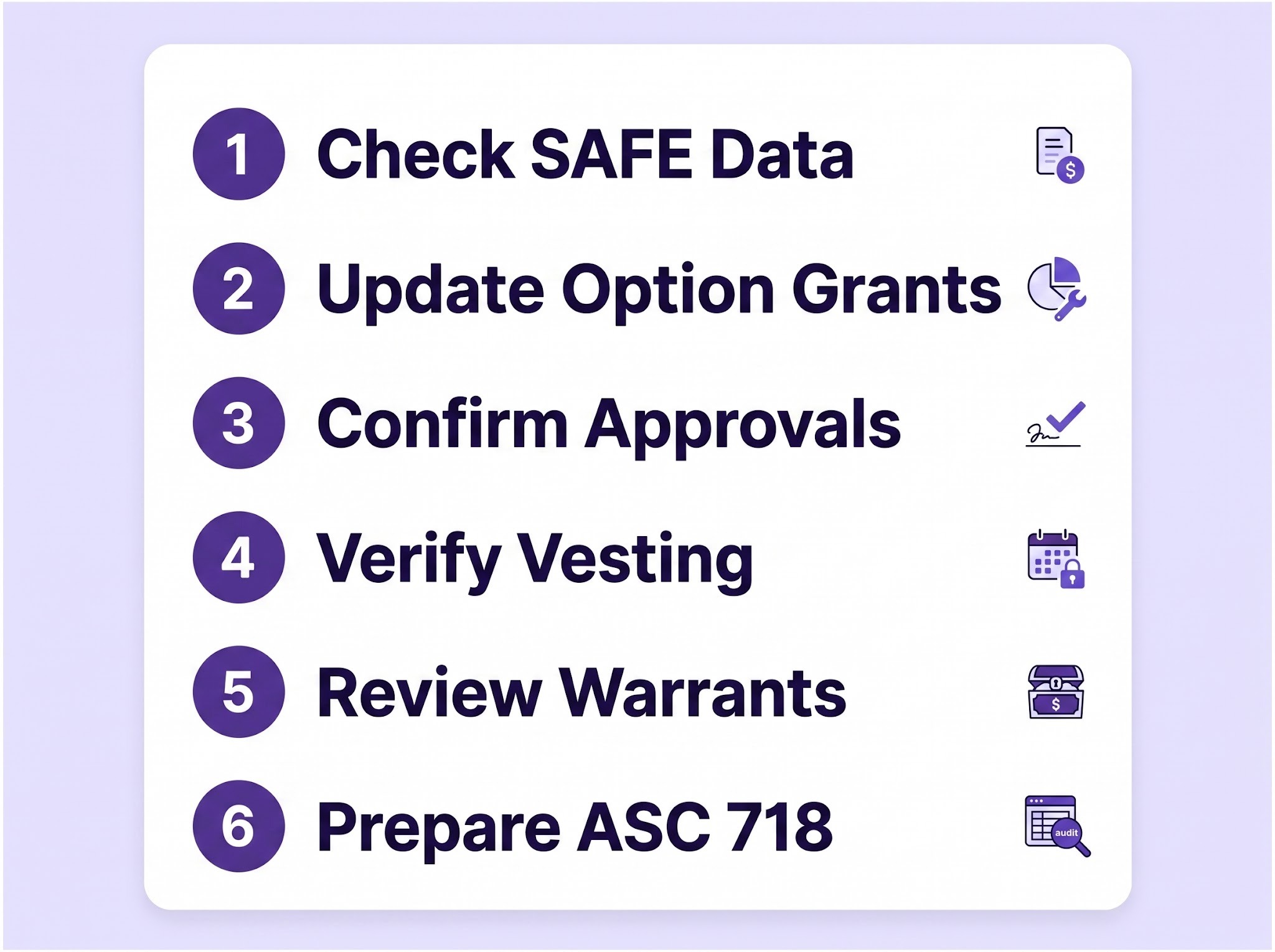
Common problem areas include inconsistent SAFE conversion assumptions, missing grant approvals, incorrect vesting dates, incomplete warrant terms, and investor side letters absent from the ownership model.
Each discrepancy can affect the number or type of securities issued in the combination. Reconcile the ledger against the underlying documents and assign responsibility for exceptions.
For teams preparing their corporate ownership records, Qapita’s cap table management software supports security tracking and financing or exit scenarios. Legal counsel should confirm how the transaction documents translate into the model.
Employees will want to know what happens to their awards, vesting, exercise rights, and ability to sell.
Options and restricted stock units (RSUs) may be assumed, replaced, cashed out, or canceled under the transaction and plan terms. Treatment can differ between vested and unvested awards.
Address exchange ratios, exercise-price adjustments, acceleration provisions, withholding, and lockups. Consider any planned employee stock purchase plan (ESPP) and post-closing refresh grants separately.
Prepare employee communications from the finalized treatment. Avoid promising immediate liquidity merely because the company will be publicly traded.
Accounting Standards Codification (ASC) 718 governs share-based compensation under US generally accepted accounting principles (GAAP). It applies to relevant private-company arrangements as well as public-company arrangements.
Going public can change available accounting alternatives, disclosure expectations, and reporting processes. A transaction may also require analysis of award modifications or replacements.
Reconcile grant dates, vesting, valuation assumptions, and expense history before closing. The finance team should be able to explain both historical expense and the treatment of awards in the combination.
Compare the proposed SPAC transaction with a traditional IPO and remaining private. Use the same operating plan, financing needs, and ownership assumptions across the alternatives.
The decision should survive a realistic redemption case and a full accounting of fees, dilution, and post-closing obligations. If the company needs more cash than the transaction can reliably deliver, address the funding gap before signing or waiving protections.
Assign owners for financial readiness, equity reconciliation, governance, and employee communication. A listing timetable becomes credible when those workstreams can support it.
A SPAC transaction puts ownership modeling, employee awards, and compensation reporting on the same timetable. Qapita can support the underlying equity records and reporting workflows so your finance and legal teams can work from consistent data when evaluating transaction terms.
Relevant capabilities include:
Book a demo to learn more about preparing equity data and reporting workflows for a proposed SPAC transaction.
A SPAC is a shell company formed to raise capital through an IPO and combine with an operating business. The shell raises money first and identifies its target later. The subsequent business combination is commonly called a de-SPAC transaction.
SPAC stands for special purpose acquisition company. It is often described as a blank-check company because investors initially fund it before knowing which operating business it will acquire. The offering documents establish the search period, securities, and shareholder protections.
The SPAC identifies a target and negotiates a combination. The parties prepare disclosures, complete the applicable review and approval process, arrange financing, and satisfy closing conditions. Public shareholders receive redemption rights under the documents. The resulting public group operates the acquired business after closing.
In a traditional IPO, the operating company offers shares to public investors. In a SPAC combination, it enters public markets through a transaction with a listed acquisition vehicle. SPAC cash proceeds depend on redemptions and other financing, while IPO proceeds depend on the final offering.
There is no universal cost advantage. Compare cash fees, sponsor equity, warrants, financing discounts, and other transaction terms. Measure both net cash delivered and ownership dilution. A lower stated advisory fee does not establish a lower total economic cost.
Potential reasons include a negotiated transaction, a suitable sponsor, financing flexibility, and a timetable compatible with the company’s readiness. These advantages depend on market conditions and deal terms. The company still needs the financial reporting, governance, and management capacity required for public ownership.
Key risks include redemptions reducing cash proceeds, dilution, financing conditions, sponsor conflicts, execution delays, and poor post-merger performance. Founders should examine whether the business can operate with downside-case proceeds and whether its forecasts and reporting can withstand public scrutiny.
If it reaches its deadline without a combination or extension, the SPAC generally winds up and redeems public shares under its governing documents. Sponsors may lose their invested capital, and warrants can expire worthless. The trust’s permitted deductions affect the amount returned.
Often, options are assumed or replaced, but treatment depends on the merger agreement and equity-plan terms. Some awards may be cashed out or canceled. Employees need clear information about share adjustments, exercise prices, vesting, taxes, and sale restrictions.
Much of the preparation overlaps, including financial statements, controls, governance, and reliable equity records. A SPAC adds sponsor economics, redemption scenarios, merger consideration, and related financing terms. Prepare the shared public-company foundation, then resolve the transaction-specific requirements.